- Insight
Key topics from Apple's WWDC 2026: Preparing apps for an AI-native operating system
Apple’s WWDC 2026 was about more than just Siri or whether Vision Pro has a future; it was a platform-level shift. L+R’s Ivan Leider explores how Apple is integrating AI directly into the operating system by prioritizing search, cross-app actions, personal context, spatial interfaces, and daily workflows over the traditional chatbot experience.
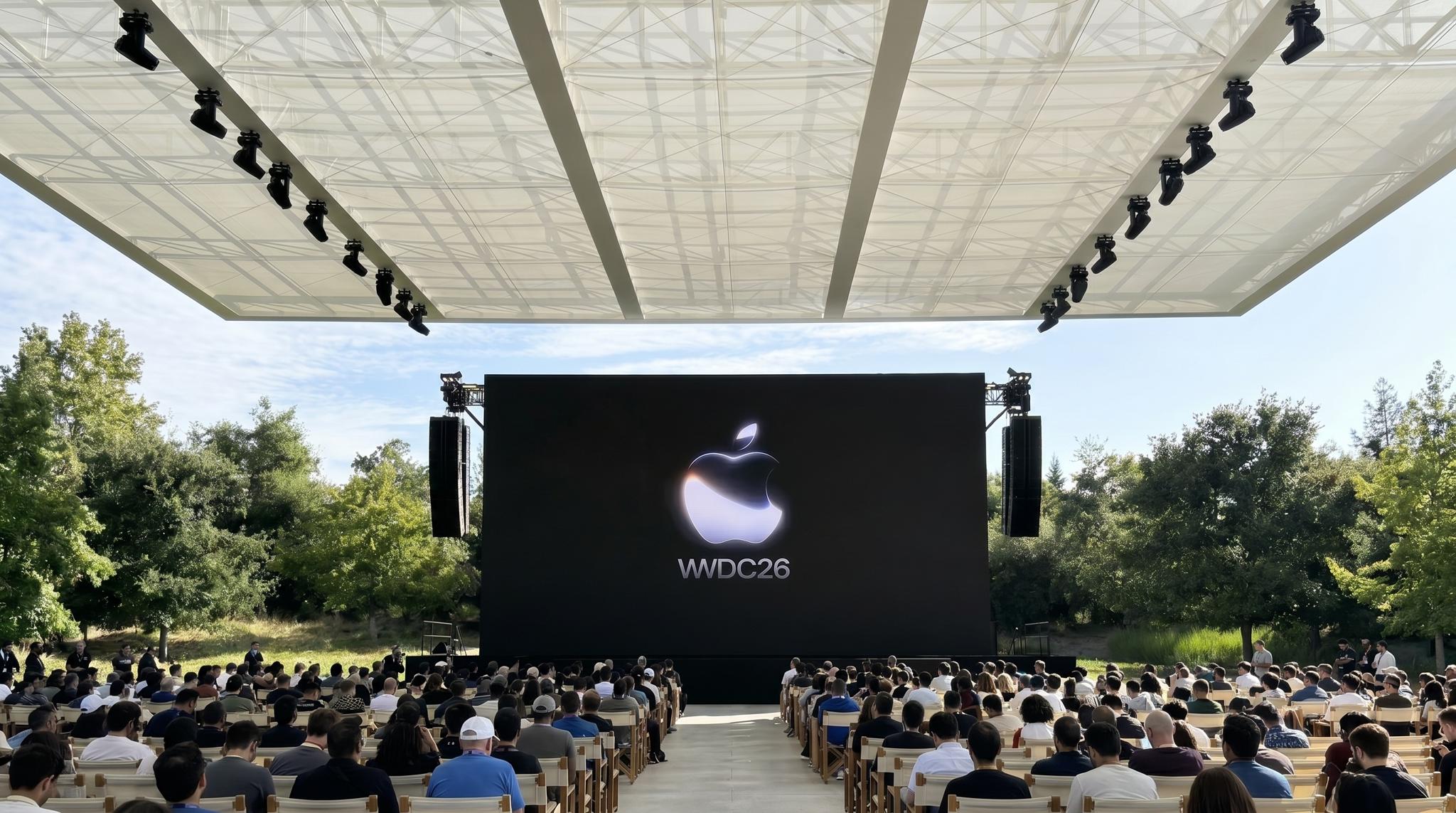
I remain, despite myself, the same Apple fanboy. That is probably the honest place to start, because WWDC 2026 was not a keynote I watched with pure enthusiasm or pure skepticism. It was more familiar than that. I want the Apple version of this to work. I want the assistant in the car to finally be useful. I want search on my devices to stop failing at things I know are there. I want the privacy story to matter. And I want builders in Europe, where I live, to participate in the same innovation cycle instead of watching it arrive late.
The easy recap is that Apple used WWDC 2026 to make a more serious Siri and Apple Intelligence argument. The more useful read is that Apple is trying to make AI an operating-system capability: grounded in device context, app actions, Spotlight, on-screen awareness, private infrastructure, spatial interfaces, and the unglamorous platform work that makes technology reliable after the demo ends. That matters, especially against the recent narrative that Vision Pro might be fading from Apple’s roadmap.
For clients and product teams, that distinction matters. The question is not simply, "Should our app have a chatbot?" The better question is whether the product can participate in this new layer. Can its content be found? Can its actions be invoked? Can it provide useful context when the user asks the system for help? That is where Apple's direction becomes relevant to digital strategy, mobile application development, spatial computing development, and AI transformation work.
The fundamentals are the feature
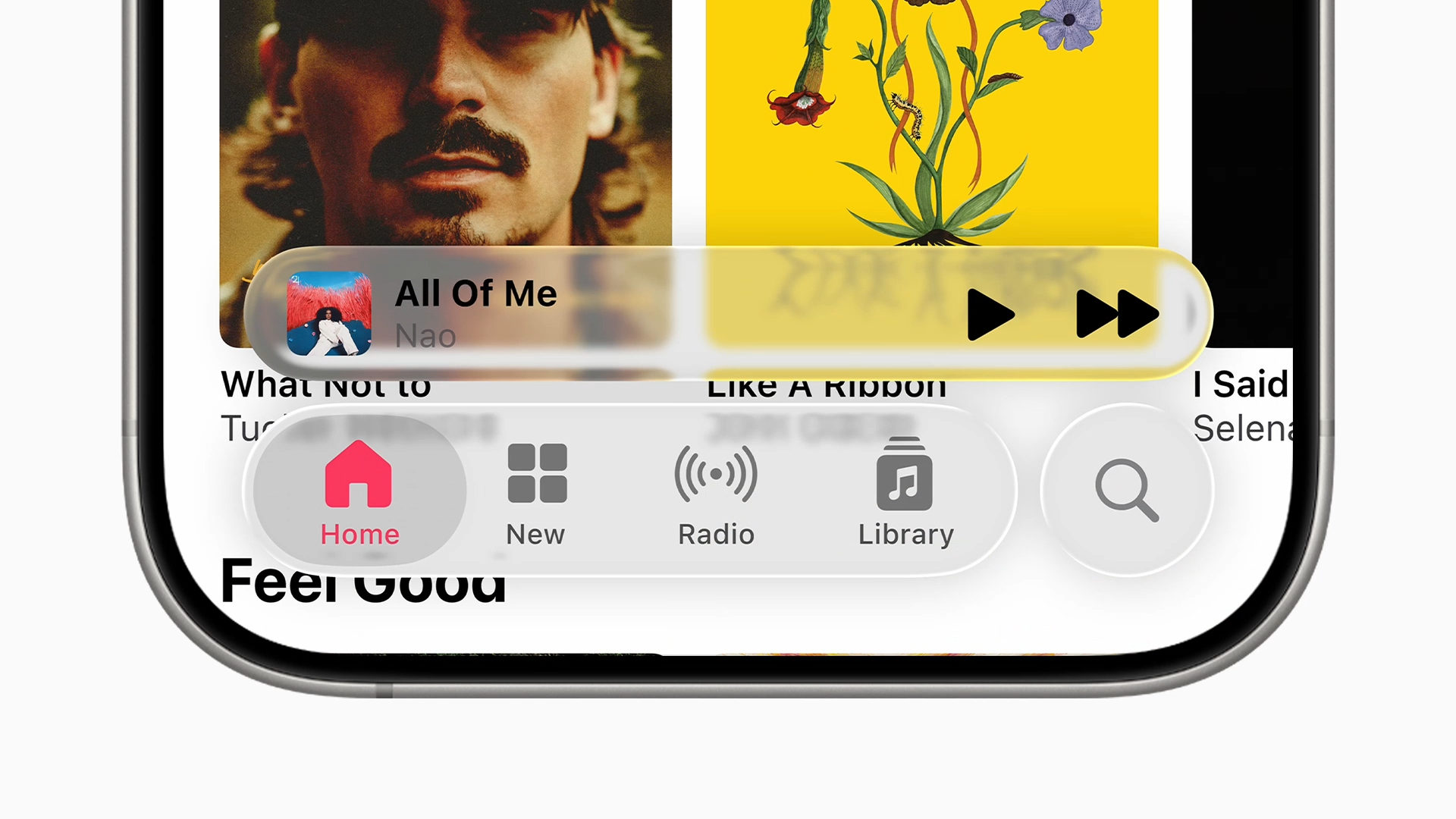
Before the AI story, Apple spent meaningful time on the basics: design refinement, performance, search, responsiveness, and the feel of the operating system.
That sounds small until you build software for a living. Users do not experience a platform as a list of features. They experience it as latency, legibility, trust, recovery, battery life, search quality, and whether the right thing happens when they ask for it. If Apple Intelligence is going to be useful, the rebuilt index, faster app launches, clearer visual hierarchy, and better transitions between system states are not supporting details. They are infrastructure.
Trust has to become usable
Apple's safety and privacy posture remains one of the company's clearest strategic advantages, but the important product work is making that posture understandable to ordinary users.
Family controls, communication safety, permissions, device setup, and developer-facing age signals are easy to treat as compliance details. They are not. For products in education, family, health, commerce, media, and youth-facing categories, OS-level trust and safety rails are part of the product environment. They shape what users expect and what responsible digital products need to support.
Apple's advantage is not one privacy feature in isolation. It is the possibility that permissions, device identity, App Store controls, family setup, local processing, and cloud-backed intelligence can work together across the ecosystem. That integration is difficult to replicate, and it is one reason Apple remains a serious platform for consumer trust.
The assistant is becoming a system layer
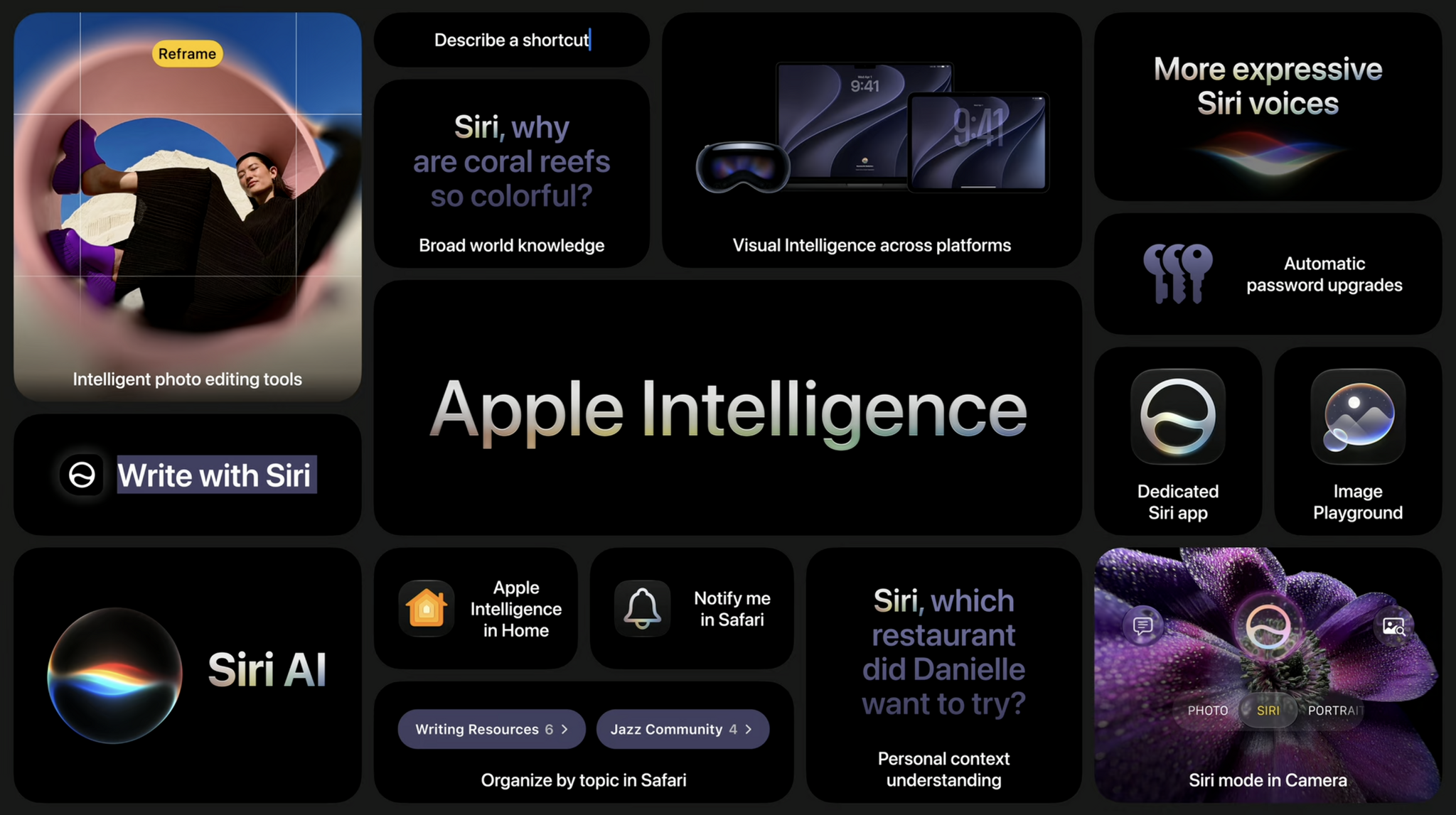
The real shift is not that Siri may become more conversational. The strategic shift is that the assistant is being connected to what the device knows, what the user is doing, and what apps can do.
Apple's developer guidance around App Intents already points in this direction. Apps need to express their actions and entities to the system so Siri, Spotlight, Shortcuts, controls, and Apple Intelligence can understand and surface them. That is not a cosmetic integration. It changes how product teams should think about discoverability.
The AI-native Apple ecosystem will not always begin with a tap on your app icon. It may begin with a user asking Siri, searching Spotlight, selecting content on a Mac, looking at something through the camera, or describing a task from another app. If the system cannot understand your content or invoke your workflow, your product may be technically installed and practically invisible.
This is where mobile application development and AI transformation converge. The first move for many brands is not to build a giant AI product. It is to audit the existing product: what content should be indexable, which actions should be available through App Intents, what context can be safely exposed, which workflows could be simplified through Siri or Shortcuts, and where intelligence should run locally versus in the cloud.

The useful demos are mundane
The most convincing assistant examples are rarely abstract. They are the boring ones: find this thing I know exists, compare these files, summarize this message, draft the reply, surface the confirmation code before I call the airline, automate a repeated workflow, or understand what is on screen before asking me to explain it.
That is what assistants were always supposed to do. Not simply answer trivia, but reduce the number of steps between intent and action.
It is also why reliability matters more than novelty here. Siri does not need to win a benchmark in a keynote. It needs to work in the car, in the middle of a busy day, across third-party apps, and in the edge cases where the user has no patience left. CarPlay is where I will be least forgiving. Voice assistance in the car is a real use case today, and today it is still often frustrating. If Apple can make that experience meaningfully better, it will matter more than a dozen polished demos.
visionOS keeps the platform story alive
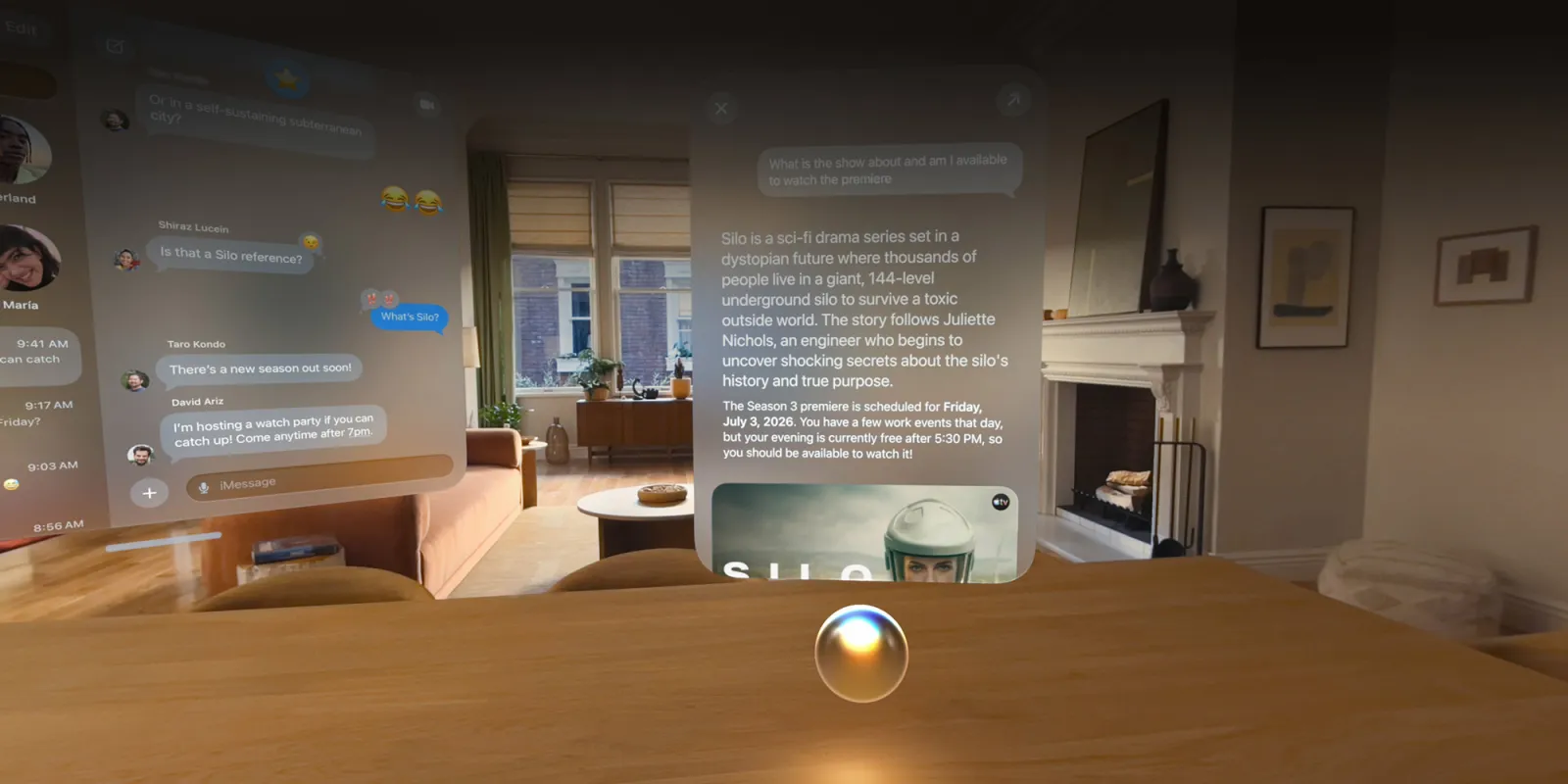
visionOS 27 is a useful signal because it applies the same platform logic to spatial computing. Panoramas becoming immersive environments, curved windows, richer Maps Flyover, visual intelligence, eye-expanded notifications, and a more responsive Siri are not just headset features. They point to an Apple computing model where content, apps, media, messages, voice, and visual context can occupy the same space.
That matters for businesses thinking beyond today's screen formats. The Vision Pro market is still early, and the surrounding media narrative has been unusually skeptical, but WWDC made clear that Apple is still investing in the interface layer. Spatial products will need to be context-aware, comfortable over time, and designed for a continuum of surfaces rather than one fixed device. For teams exploring training, retail, collaboration, entertainment, product visualization, or immersive operations, this is where spatial computing development becomes less about novelty and more about preparing for the next interface layer.
Europe is the uncomfortable footnote
The European rollout question is not a minor regional complaint. It affects what companies can test, what developers can integrate, what agencies can prototype, and how quickly European products can adapt to the next layer of mobile interaction.
There is an irony here. Apple is the major platform company making one of the strongest privacy arguments around AI. It is investing in local processing, private cloud infrastructure, and a model where sensitive personal context is treated as the center of the product. If any large platform should be able to bring privacy-conscious AI into Europe, it should be Apple.
And yet, European users and builders are still waiting on parts of the experience. For a market that says it wants privacy-preserving innovation, that is a real strategic tension.
What product teams should do now
The practical work after WWDC is not to add a chatbot to the corner of every interface. It is to prepare products for a world where the operating system can mediate intent.
That starts with a simple audit. Can the system find the content that matters? Are the core user actions exposed in a structured way? Can common workflows be invoked without opening the app first? Is the product's privacy promise reflected in the architecture? Can internal teams use the same thinking to automate their own repetitive workflows through Shortcuts and AI-assisted workflow tooling?
For businesses building in the Apple ecosystem, the next advantage will come from products that are searchable, actionable, context-aware, privacy-conscious, and ready to participate when the user asks the system for help.
My read is that WWDC 2026 was not only Apple's AI catch-up moment. It was Apple returning AI to the place where it makes the most sense for Apple: the operating system. The value, if it works, will not be the model by itself. It will be the integration: the assistant understanding context, the system knowing which app can act, the interface staying readable, the spatial layer staying in view, and the user's private information staying protected.
I am still skeptical in the places where skepticism is earned. Search needs to prove itself. Siri needs to work outside demos. CarPlay needs to stop being frustrating. Third-party app integration will determine whether this becomes a platform shift or a nice Apple-only layer. Europe needs a path forward. And Vision Pro still has to prove that spatial computing can become a durable product category, not just an impressive demo surface.
But the direction is right. The companies that prepare for it now will be easier to find, easier to use, and easier to trust when this operating-system layer becomes ordinary.