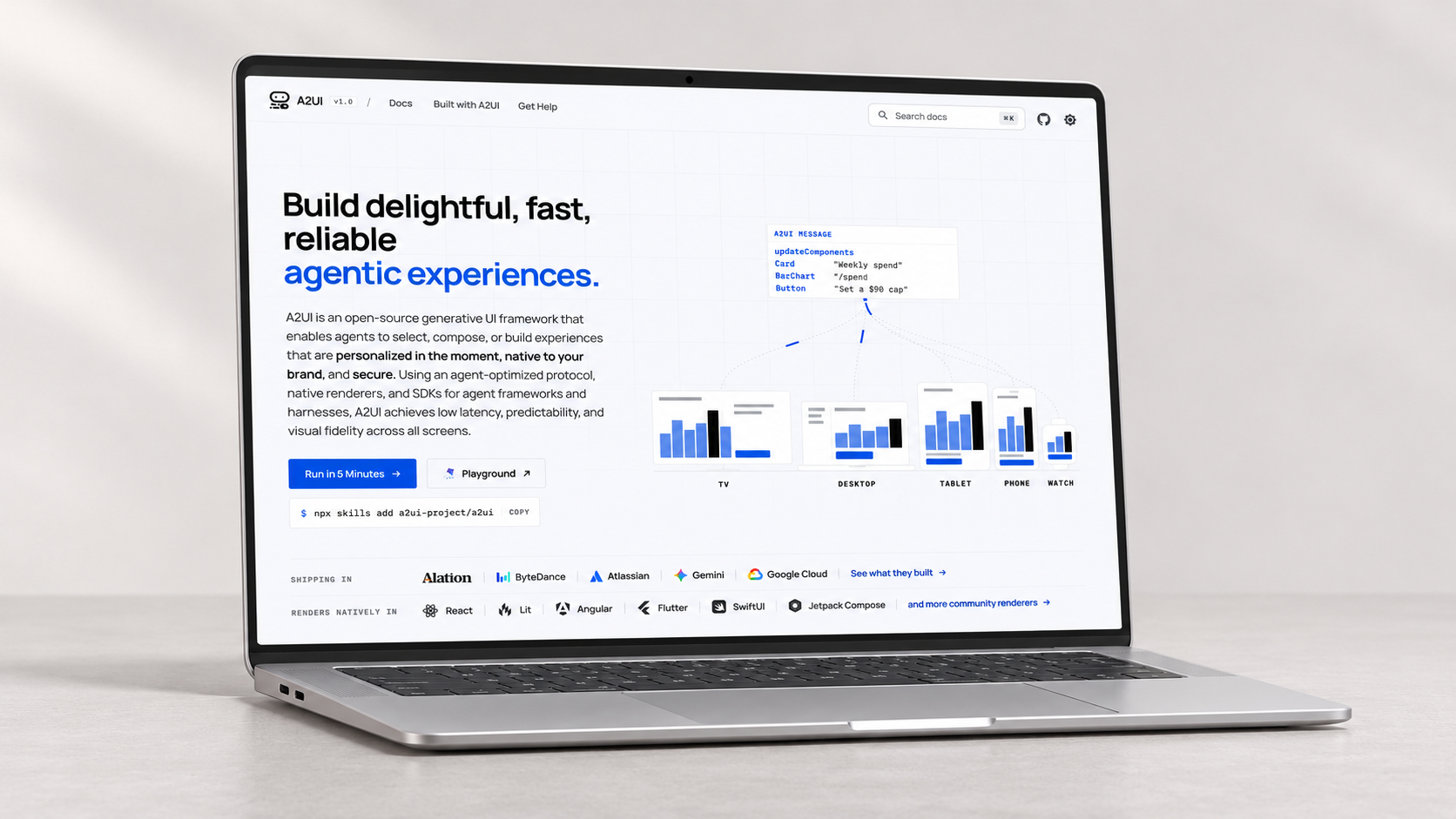
Google has launched A2UI, an open generative UI framework that lets AI agents respond with task-specific interfaces rather than text alone.
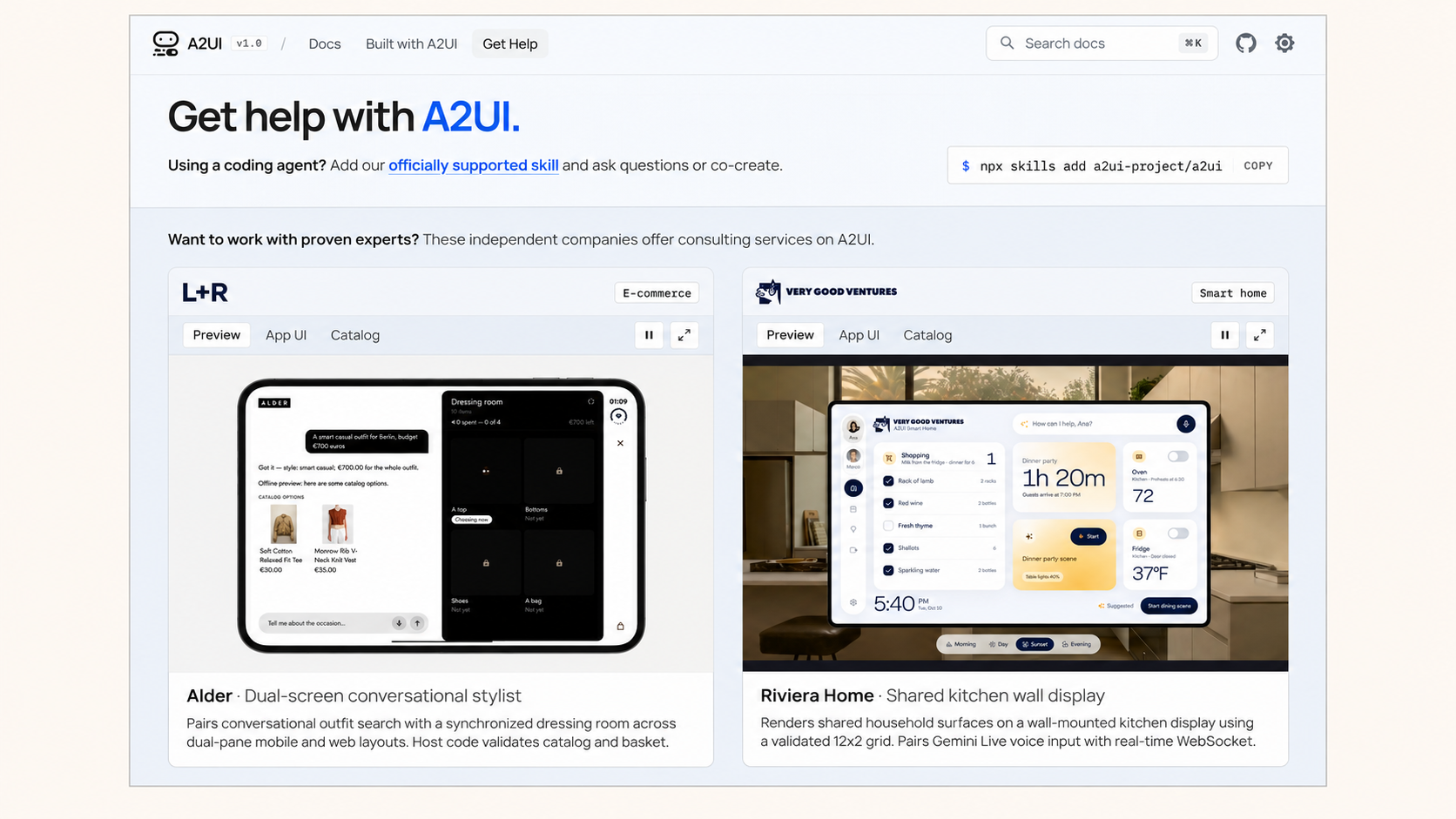
We developed the open-source reference application, 'Alder,' to a showcase a retail use case to support those interested in implementing the new framework. The resulting conversational stylist and virtual dressing room project is now featured as a key reference application on the official A2UI site.
Our exploration focused on fashion, where discovery is visual, preferences are nuanced, and customers often need to compare multiple products before acting. A text-only assistant can recommend an item. An A2UI experience can turn that recommendation into a branded, interactive shopping flow with product cards, outfit combinations, fit and budget controls, a synchronized dressing room, and basket actions.
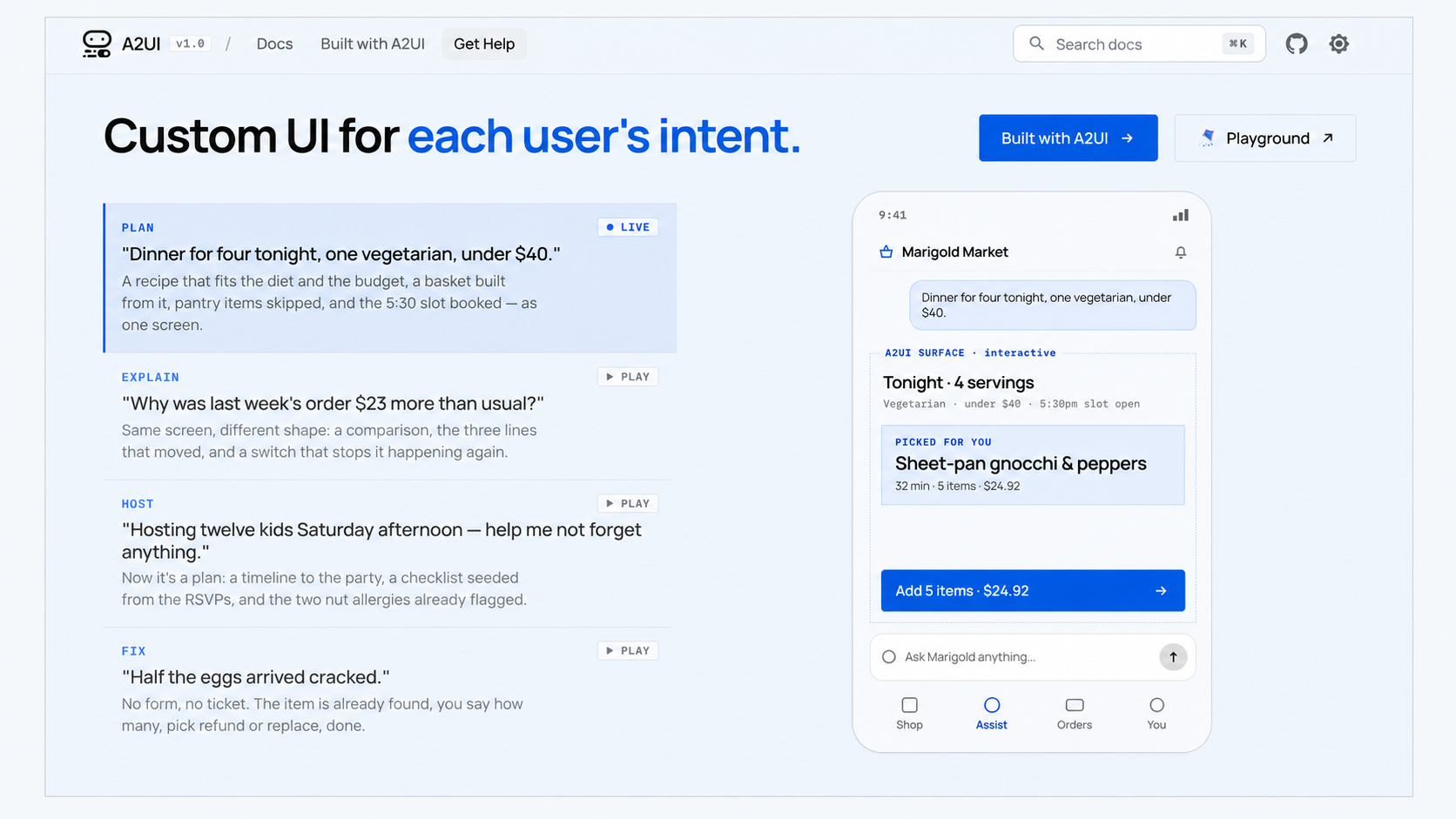
Generative UI means an AI agent can respond to intent with the interface a task needs and not just a paragraph in a chatbot. With A2UI, the agent describes that interface as structured data, and the host product renders it through approved components. The business keeps control of its design system, accessibility, product data, permissions, and security.
From conversation to conversion
Fashion e-commerce makes the limits of chat especially clear. A shopper may describe an occasion, preferred silhouette, size, budget, and brand constraints in a few sentences. The next step should not be another wall of text. It should be an interface that lets the shopper see a coordinated edit, compare alternatives, refine a look, and move selected products toward purchase.
A2UI addresses that gap by allowing an agent to describe the interface a task needs. The retailer’s application renders it through components the organization has already approved. The agent can adapt the experience to a shopper’s intent while the commerce platform remains responsible for catalog data, inventory, pricing, validation, and actions.
For retail teams, that separation matters. It creates room for more responsive discovery without asking a brand to surrender its design system or let a model generate arbitrary interface code.
What we built with Alder
Alder is a dual-screen conversational stylist for fashion e-commerce that pairs product discovery with a synchronized dressing room across mobile and web. A shopper can describe an occasion, set a budget, and build a look from a fictional catalog while the interface updates alongside the conversation.
The reference application uses Flutter, GenUI, and Genkit Dart. Its host validates catalog and basket state locally, while a 60-component commerce catalog gives the agent a controlled system for composing the shopping experience. The app runs across iOS, Android, and web, adapting from compact screens to the dual-pane showcase layout.
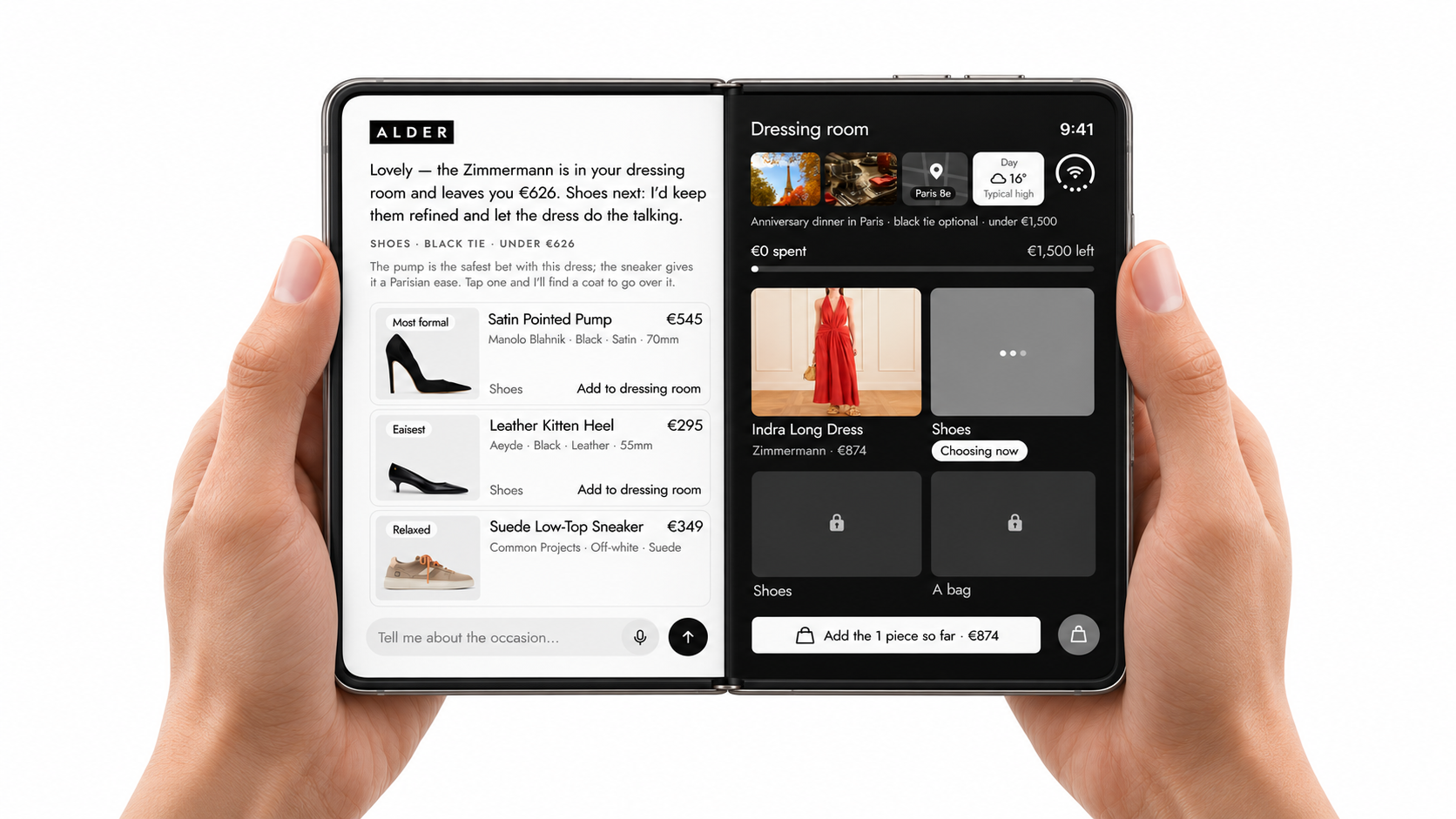
Alder makes several A2UI principles concrete:
- the agent composes from registered components instead of generating arbitrary interface code;
- the host application remains responsible for product data, inventory, basket state, validation, and actions;
- the same interaction model can adapt across screen sizes and platforms;
- designers and engineers can inspect the component catalog and message flow together.
What the showcase gives commerce teams
The official A2UI showcase connects every part of the work: the L+R listing, a live Alder demo, the shared Figma design, and the Apache 2.0-licensed source repository. The directory lists independent companies and does not rank, certify, or endorse them; its practical value is that retail product teams can inspect a complete working concept instead of evaluating generative UI in the abstract.
Together, the materials show how retail strategy, UX/UI, design systems, agent integration, commerce logic, and cross-platform engineering come together in a production-minded A2UI experience. They give fashion and e-commerce teams a starting point for identifying high-value workflows—from assisted discovery and styling to comparison and basket building—where generative interfaces can improve decision-making without giving up brand or product control.
What excites us most is the range of retail and fashion experiences this model can unlock: guided discovery that feels closer to working with a stylist, product comparisons shaped around a customer’s priorities, more useful clienteling tools, and service flows that adapt as needs change. The opportunity is not to turn every screen into a chatbot. It is to let customer intent reshape the interface when doing so makes shopping clearer, faster, and more useful.
Learn more about L+R’s A2UI consulting and development services.
A2UI
A2UI is an open-source generative UI framework by Google for secure, branded agent-driven interfaces.