Display glasses add a new application surface alongside the phones and computers people already use. LVSR explores how those devices can participate in one connected experience through interaction models suited to each screen. One URL opens interfaces shaped for touch, keyboard input, and a glanceable wearable display. A familiar real-time game makes the system's interaction design, distribution, and coordination immediately visible.
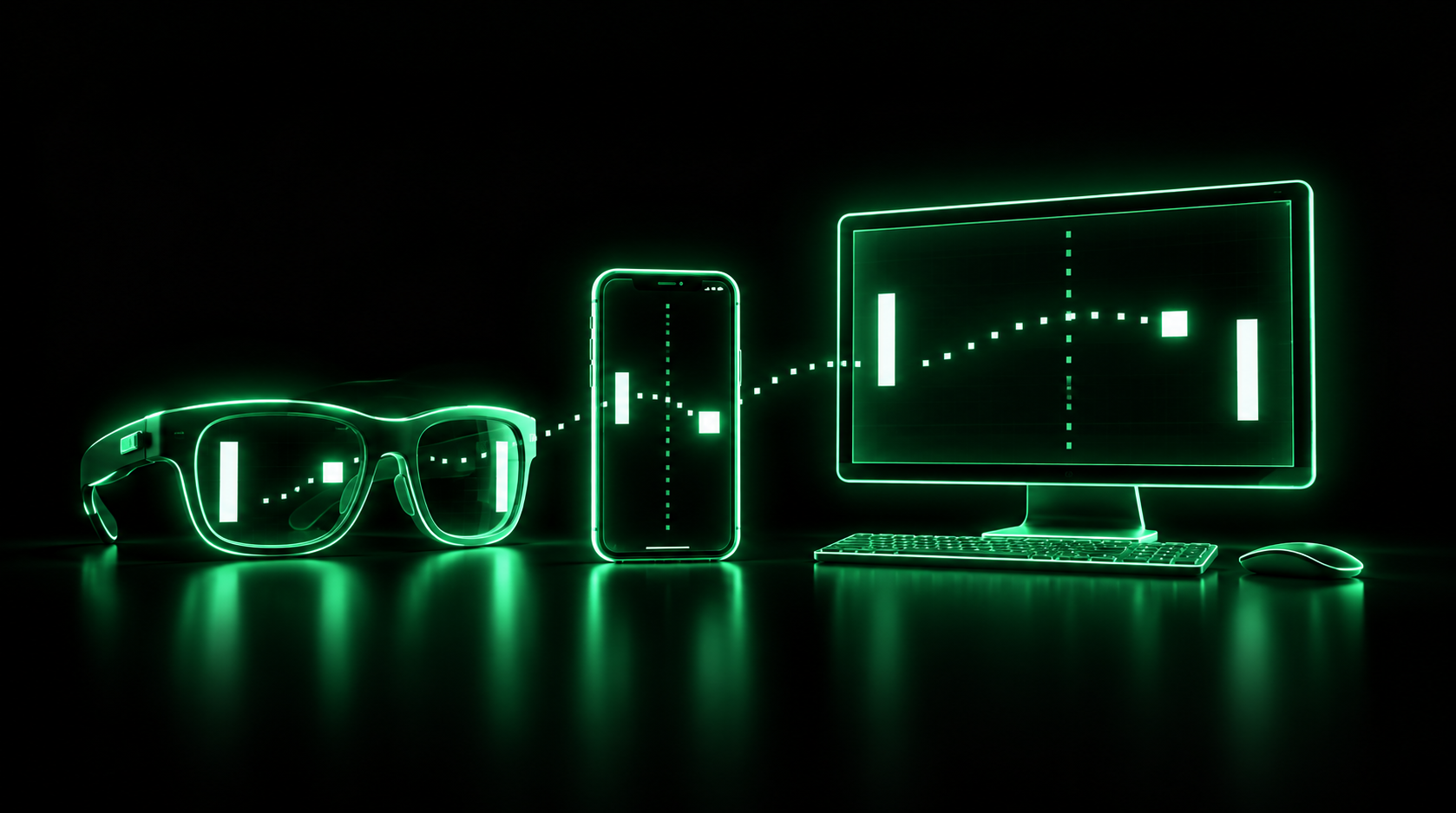
The central challenge was coordinating device-specific interactions within one coherent match. Display glasses require legibility, focus, and fast input in a compact field of view. Phones need touch-first controls, while computers reward keyboard immediacy. Every interface still had to preserve the shared rules, pace, and responsiveness of the live match.
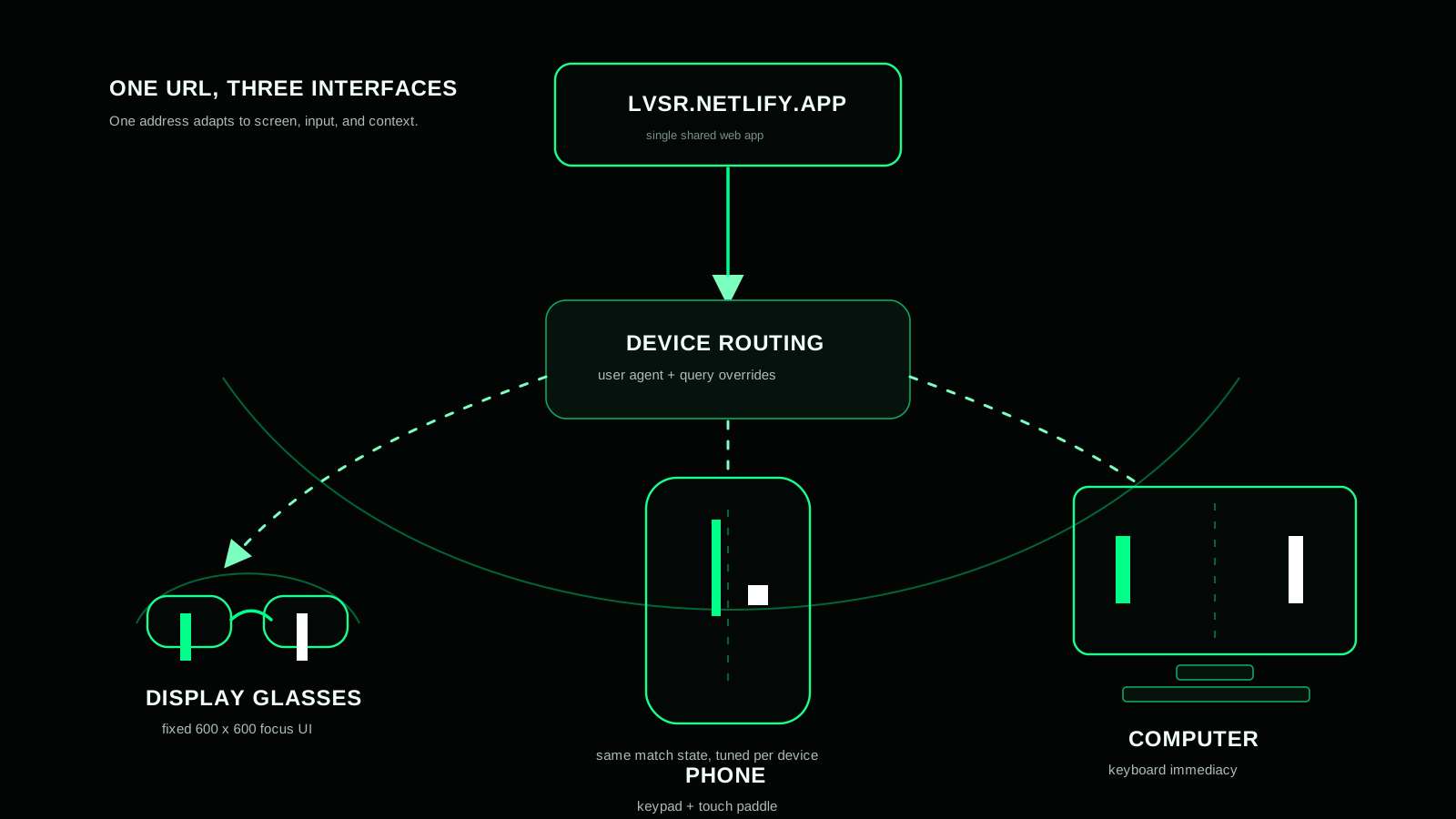
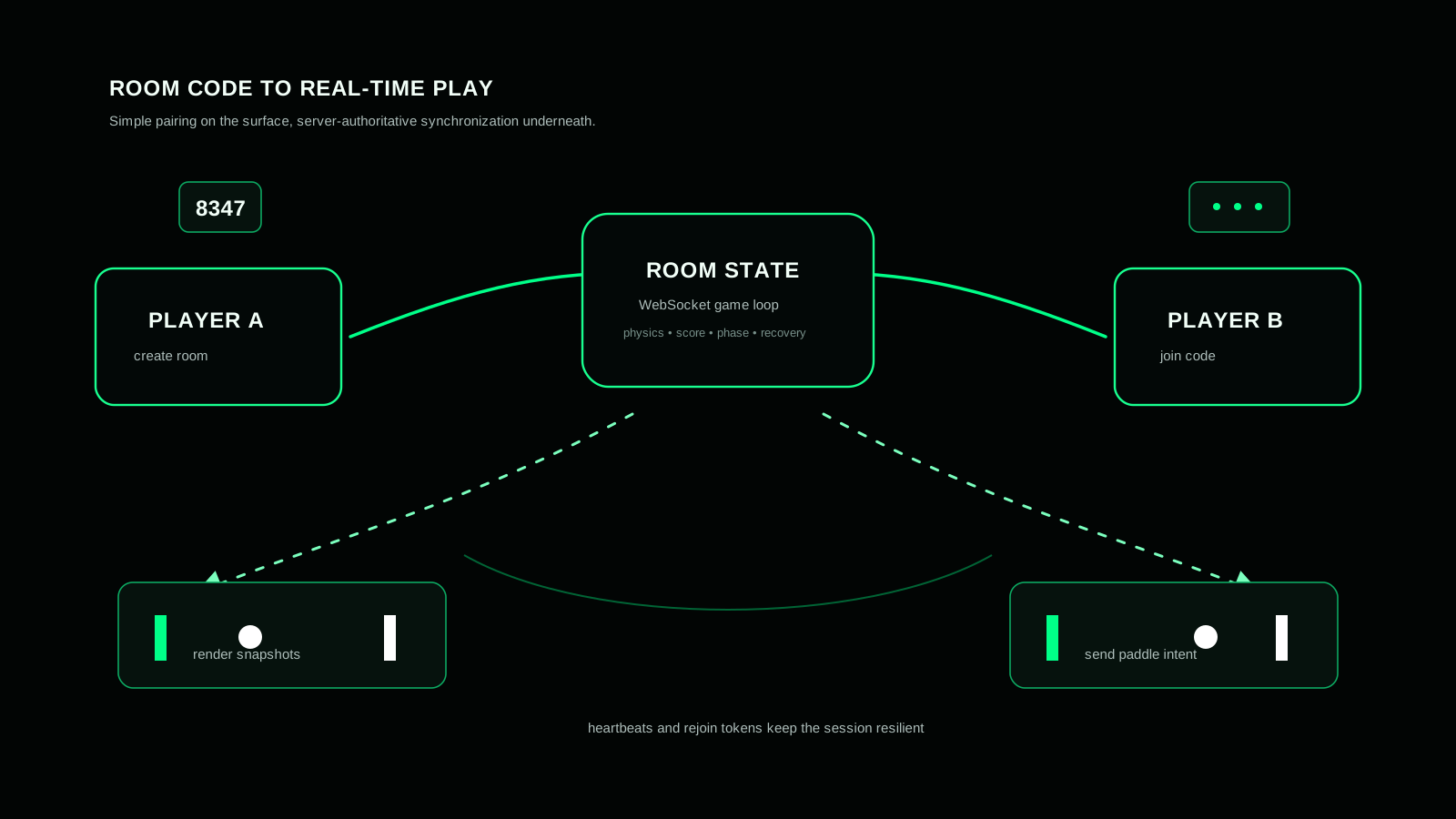
We designed LVSR as a responsive real-time web application with room-code pairing, practice mode, and controls tailored to each device. DisplayGlasses.dev supported rapid prototyping of the wearable interface, allowing the team to evaluate scale, placement, and information density in context. A WebSocket server owns physics, score, match phase, heartbeats, and rejoining behavior, while each client sends lightweight paddle intent and renders the same synchronized state through its own interface. This separation keeps the match authoritative while giving every device the freedom to present controls and feedback for its own interaction context.
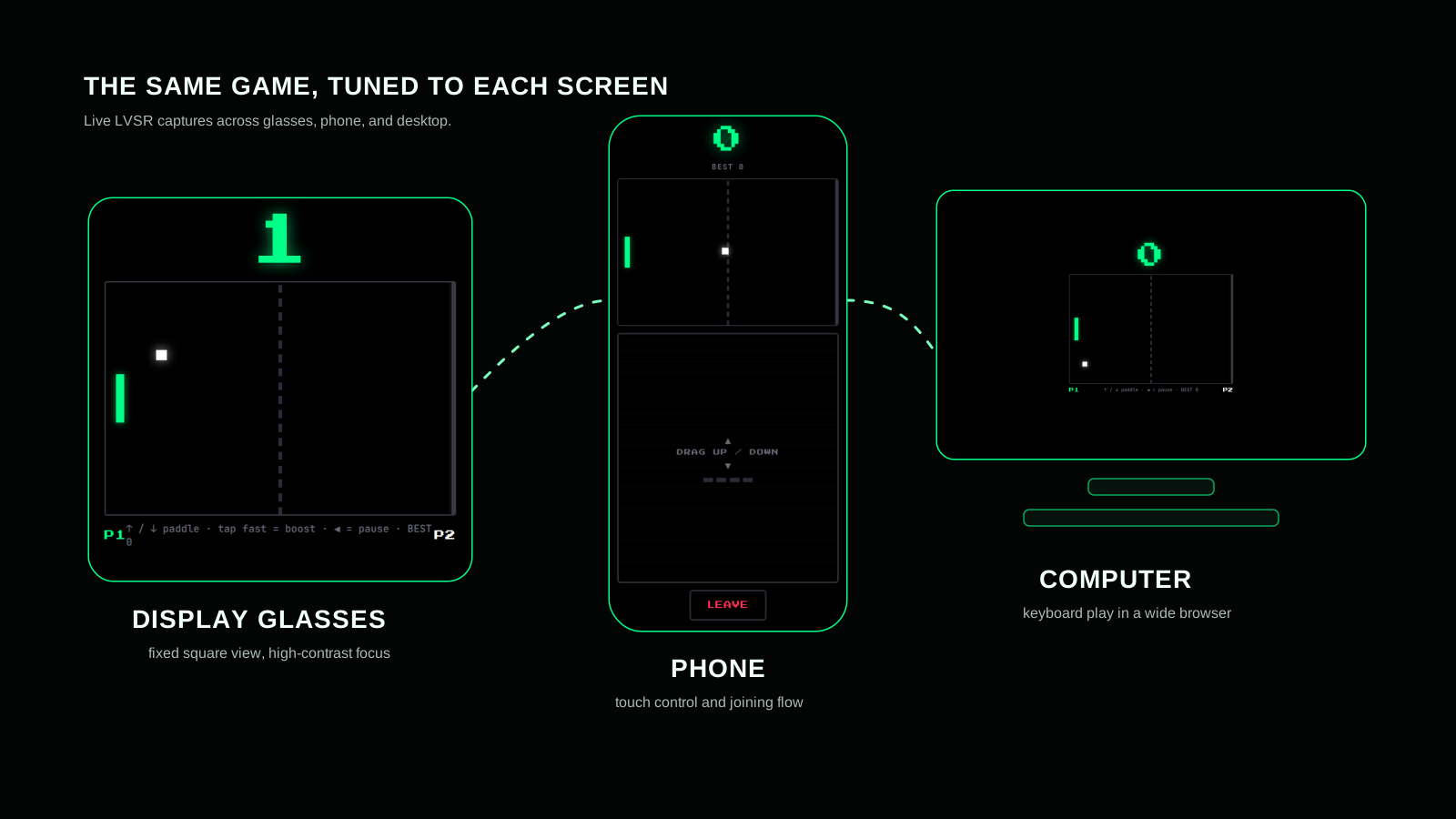
LVSR demonstrates how emerging hardware can join ordinary web workflows when responsiveness is designed as a product system from the start. Players enter from the screen already at hand, pair through a simple room code, and share one live experience through familiar web distribution. The working prototype establishes a reusable model for applications that bridge handheld, desktop, and wearable interfaces. It also gives product teams a concrete way to evaluate where a wearable screen adds value within a larger device ecosystem.
New interfaces become useful when they connect naturally to the devices, behaviors, and links people already understand. LVSR makes that principle tangible in real time.