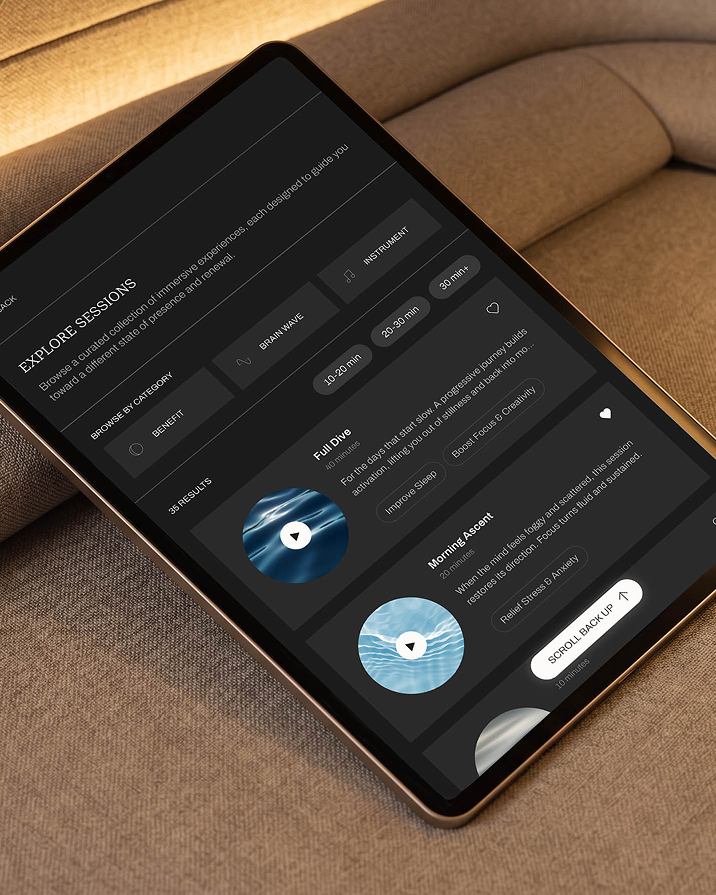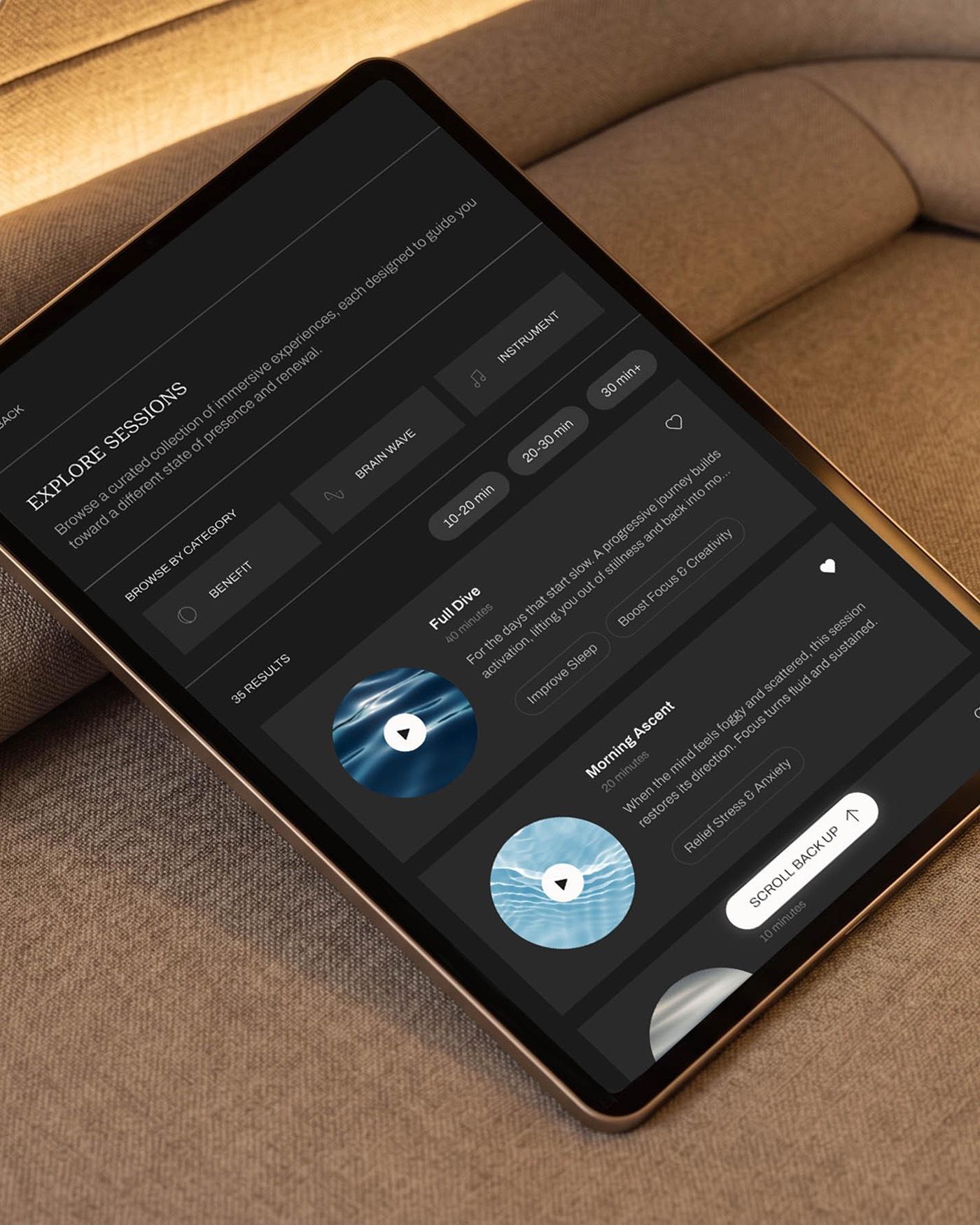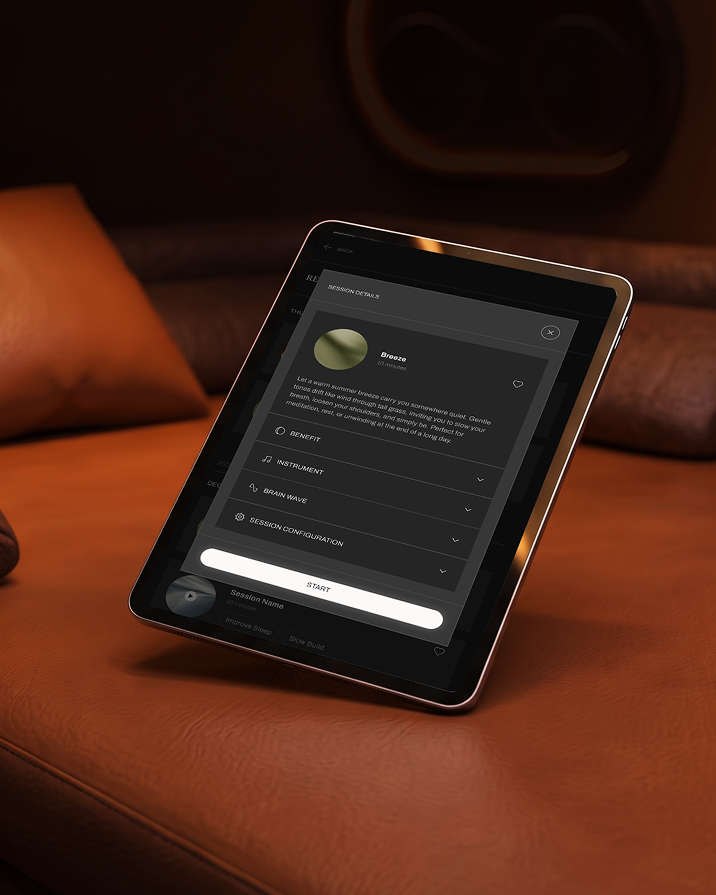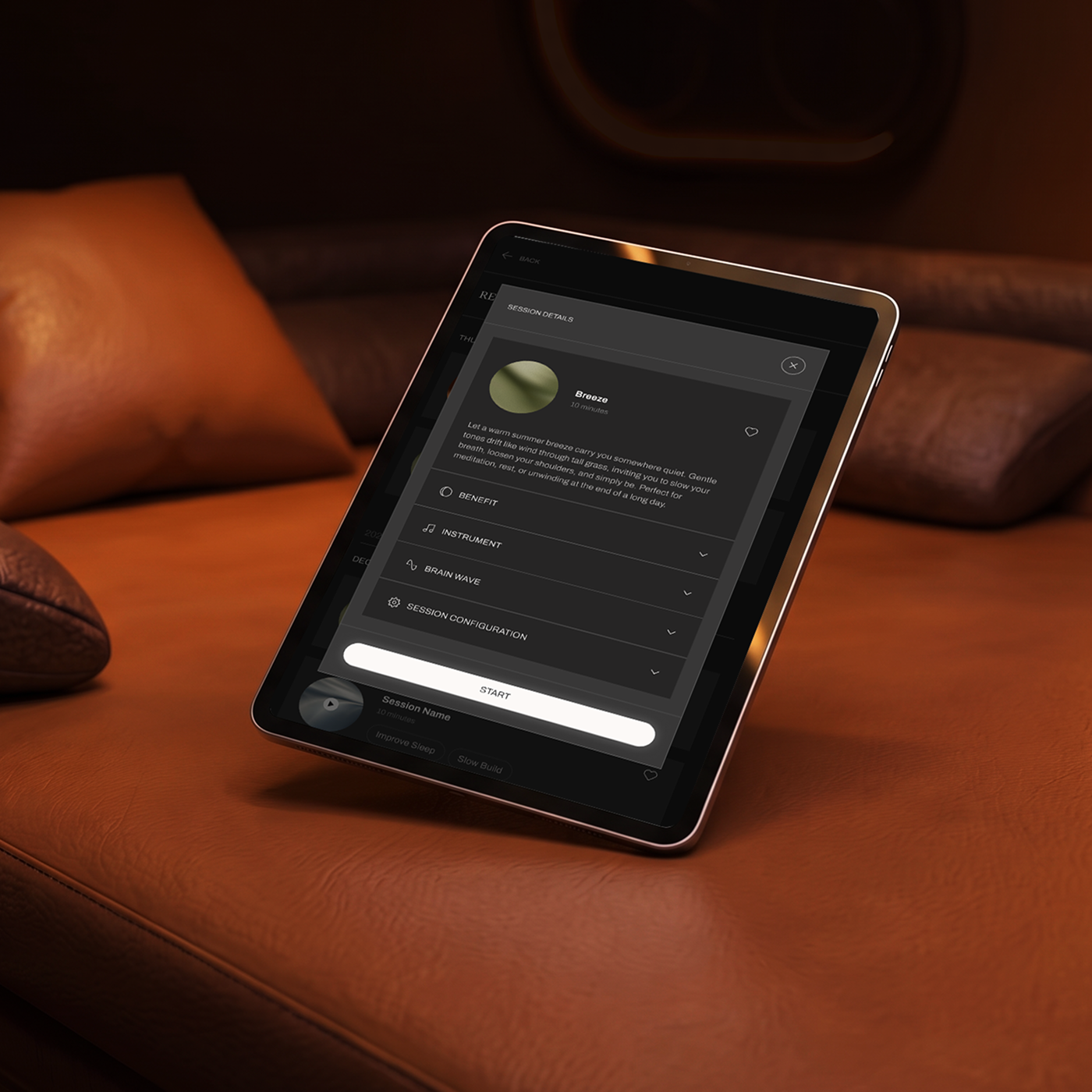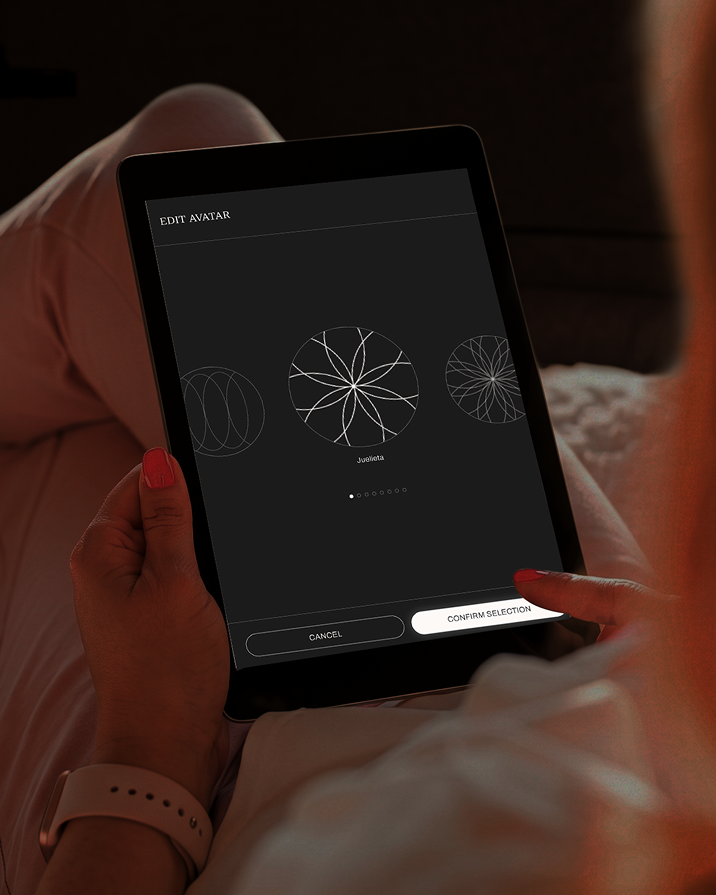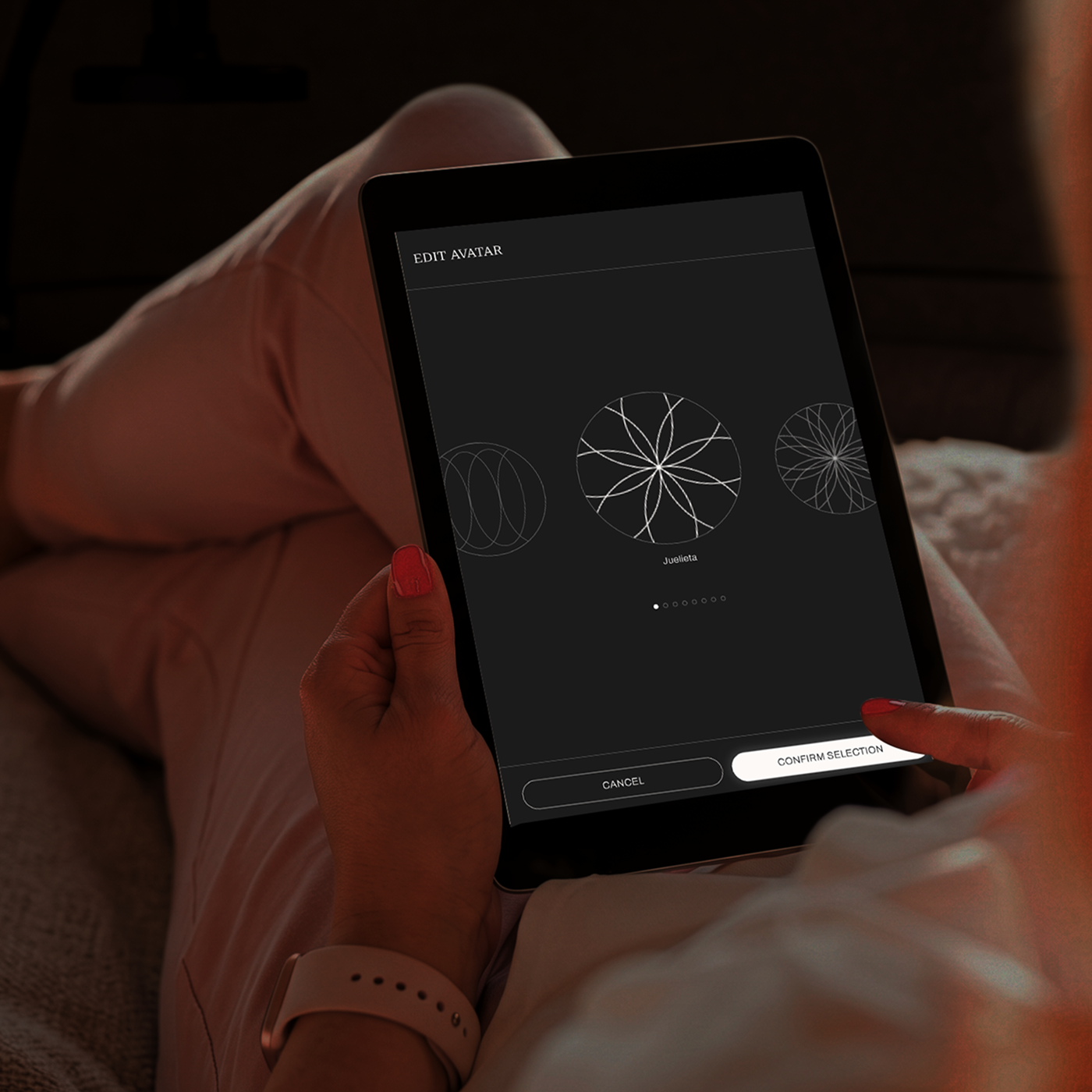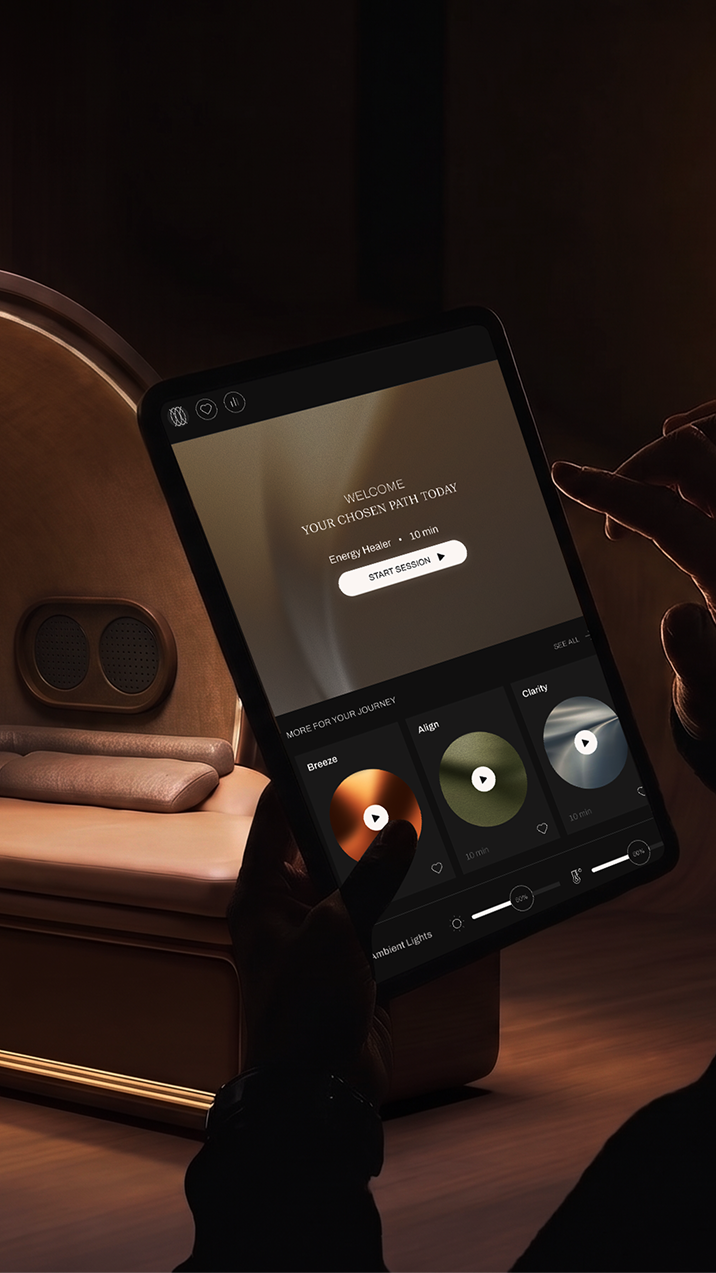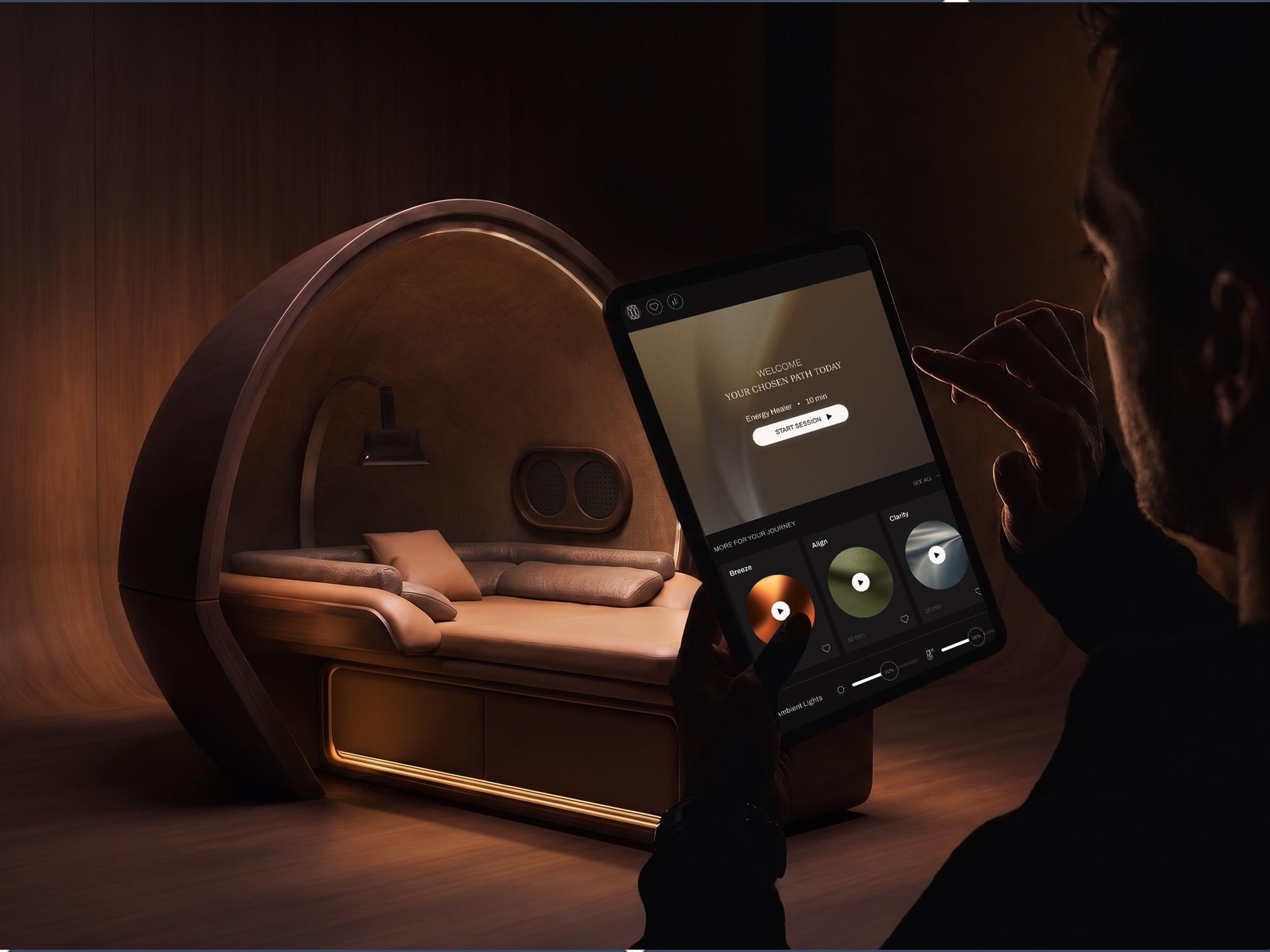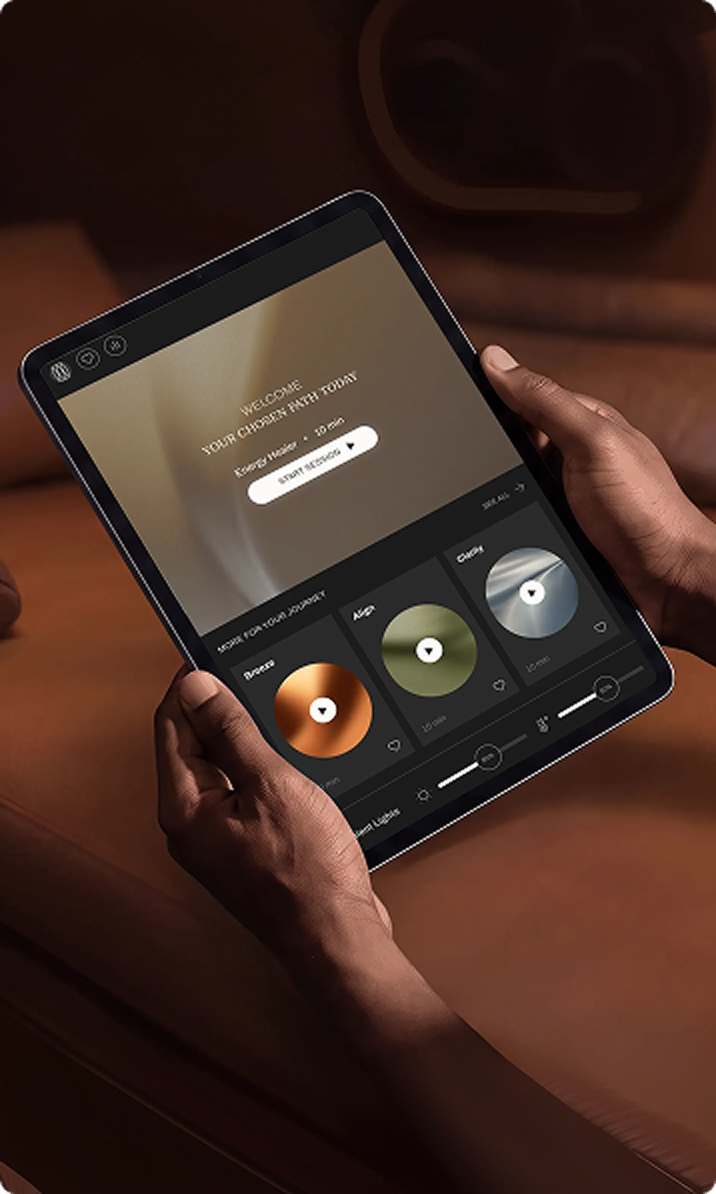
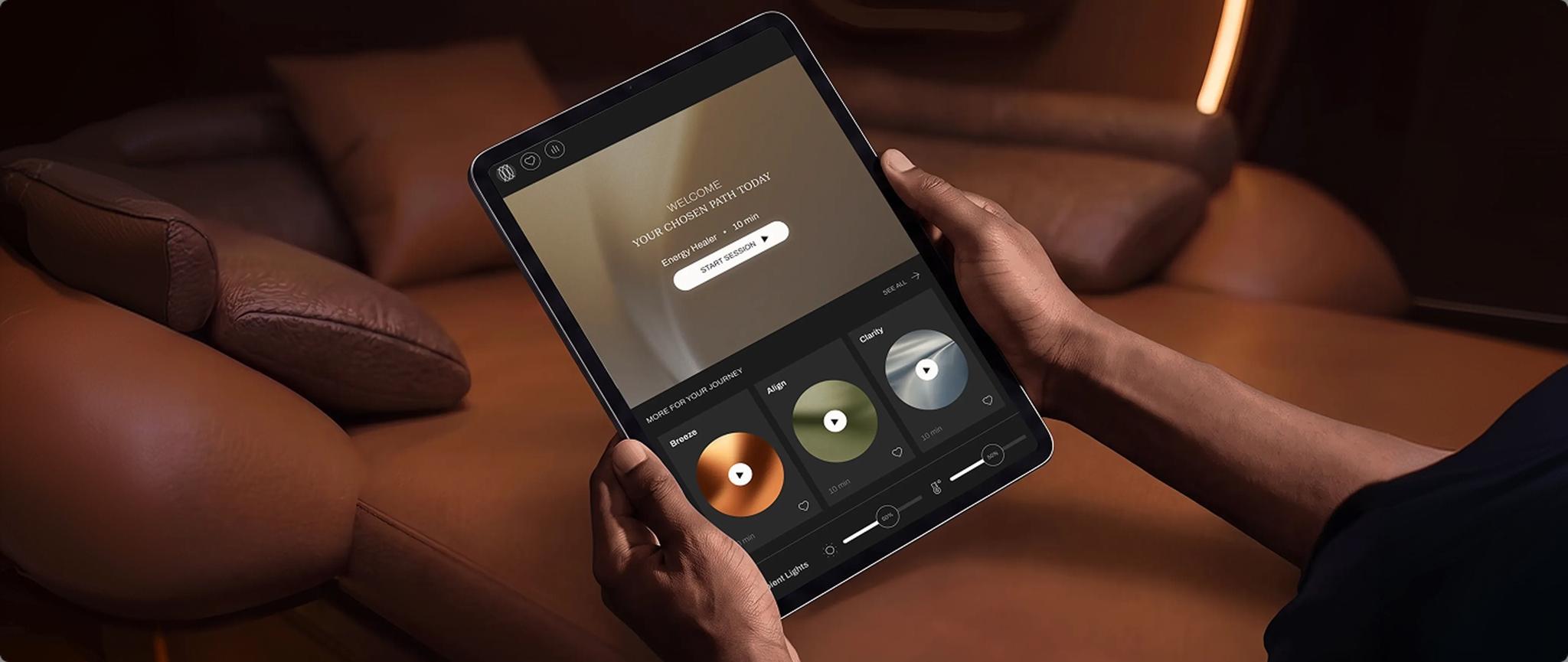
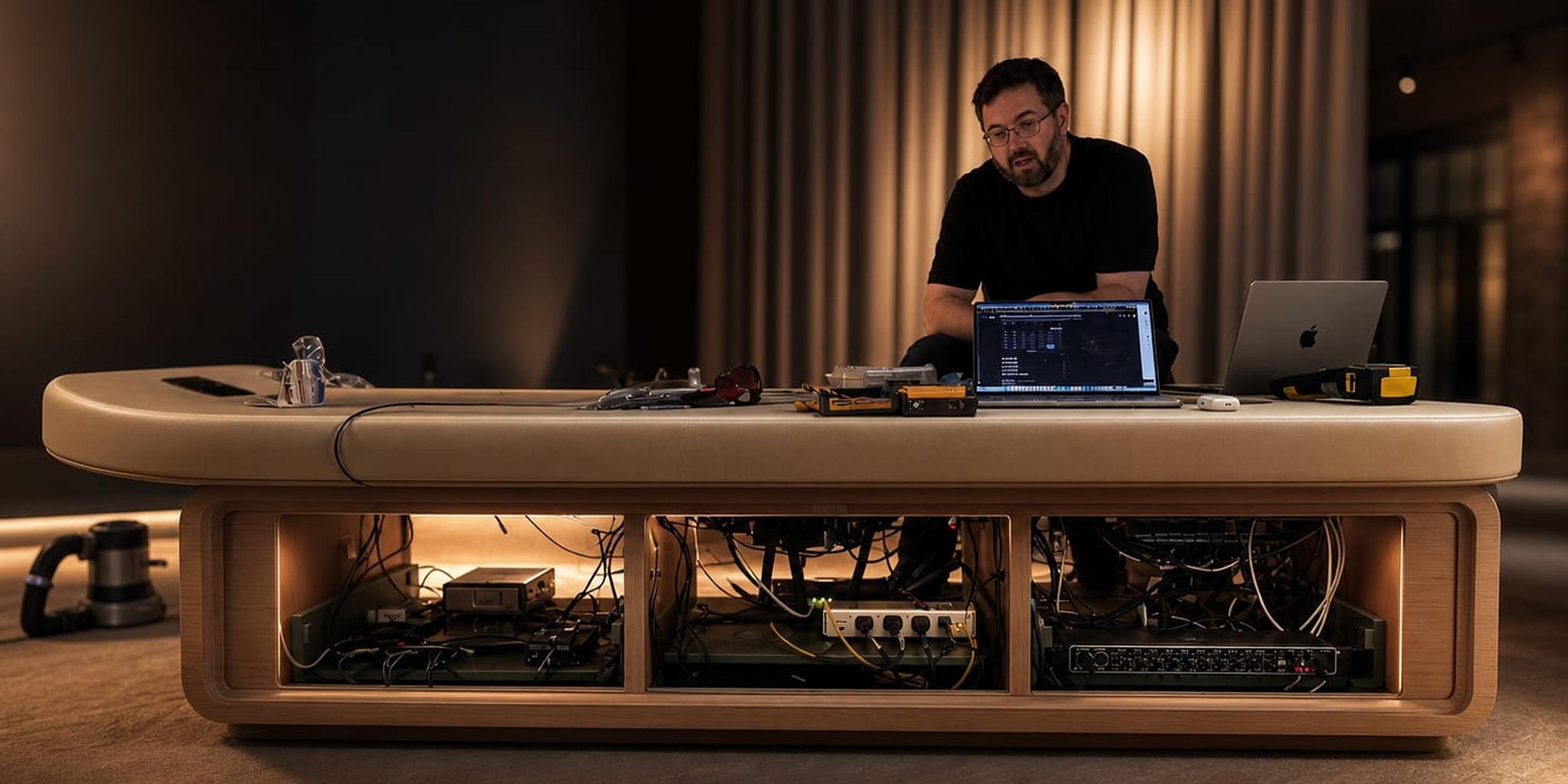
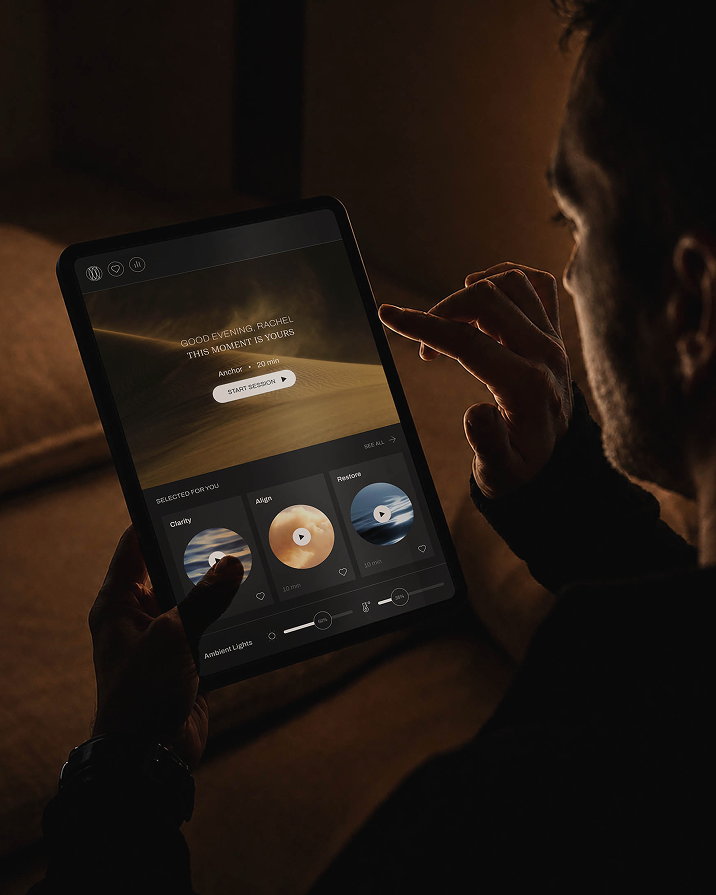
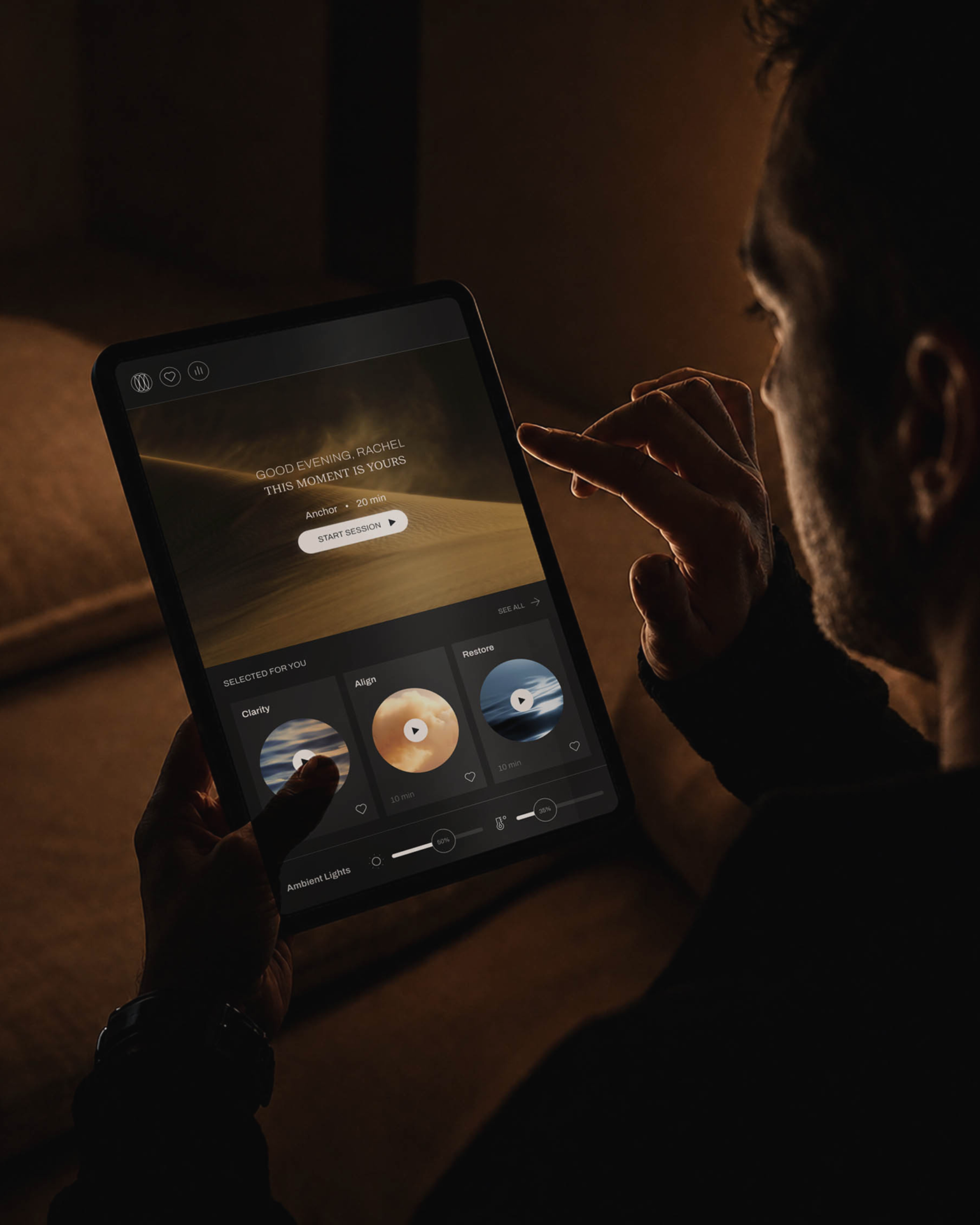
The SATYA S:9 is a premium connected wellness device designed for private residences and luxury wellness spaces. A person lies inside the object while light, sound, and vibration work together as a single therapeutic composition. Its touchscreen console is not an accessory; it is the front end of the physical product, the surface that selects sessions, configures intensity, and keeps the atmosphere quiet enough for a near-dark room.


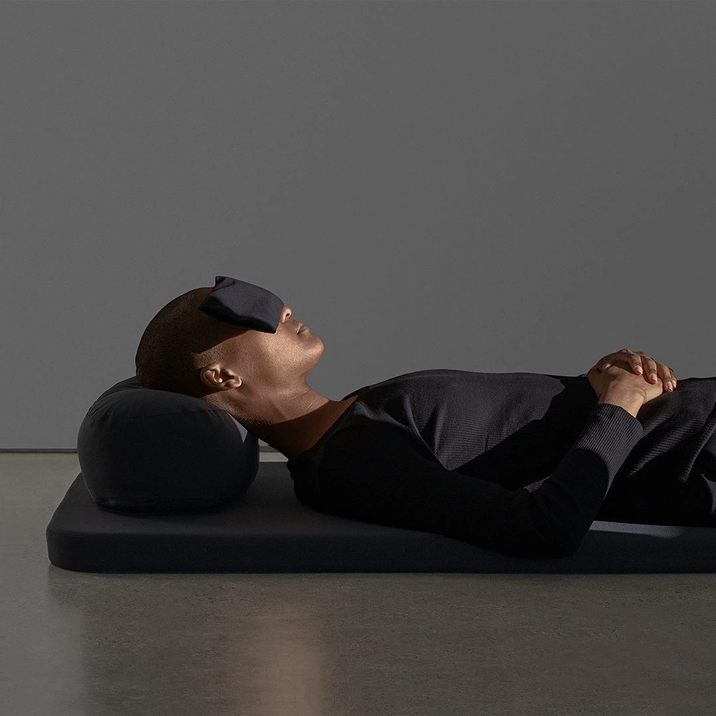
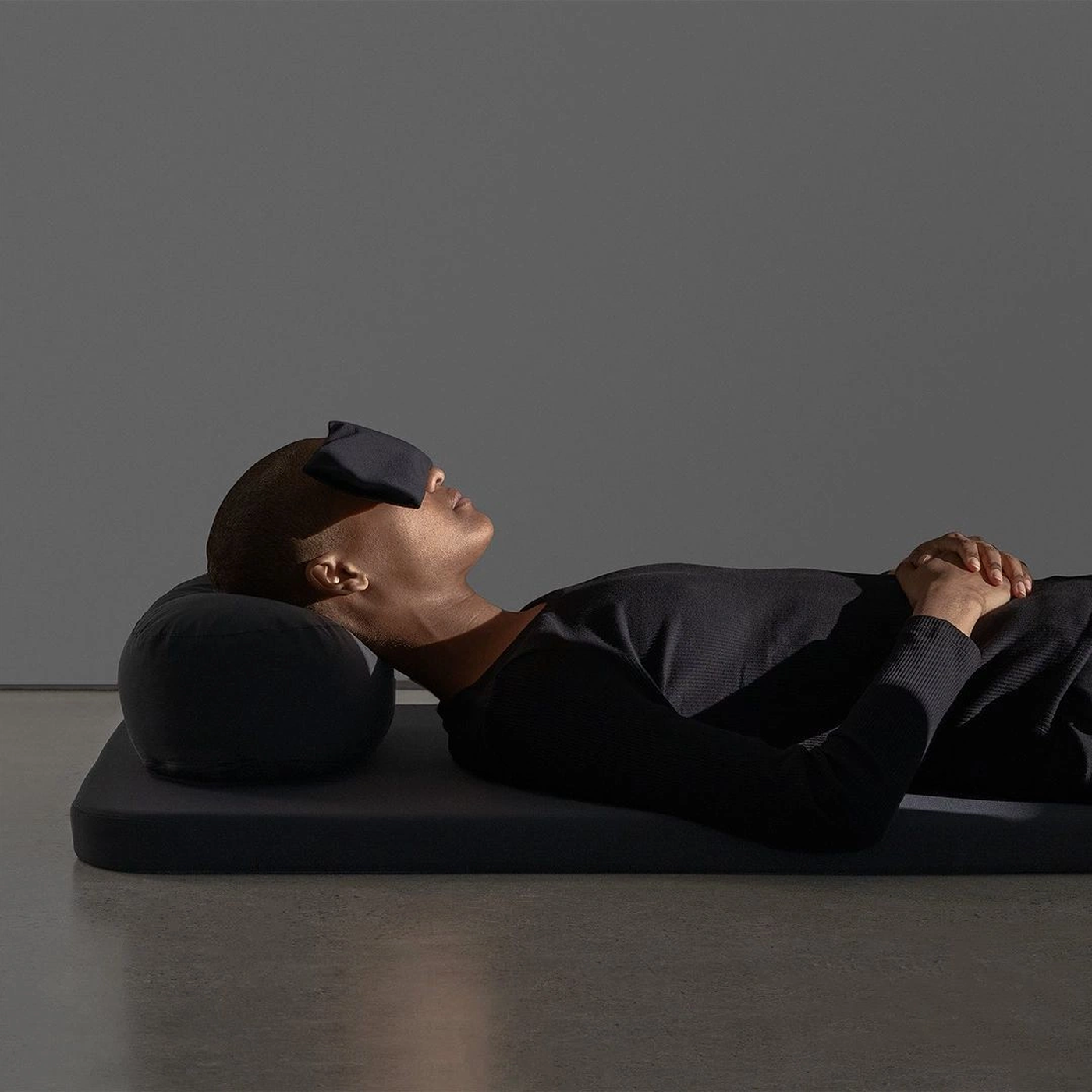
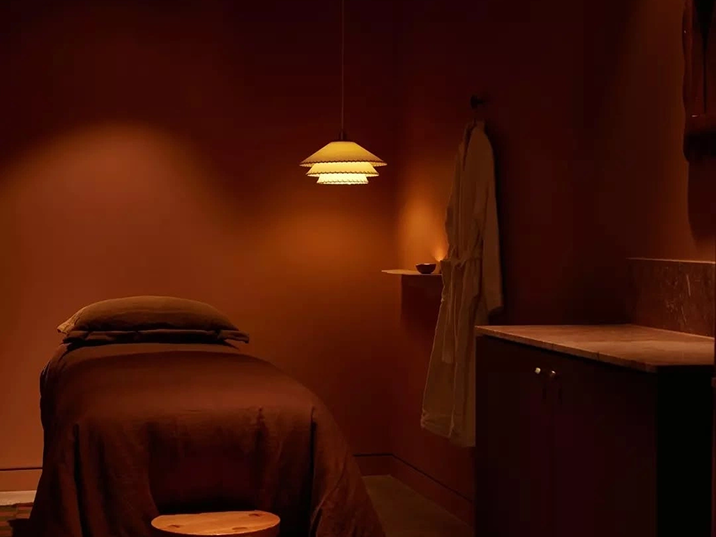
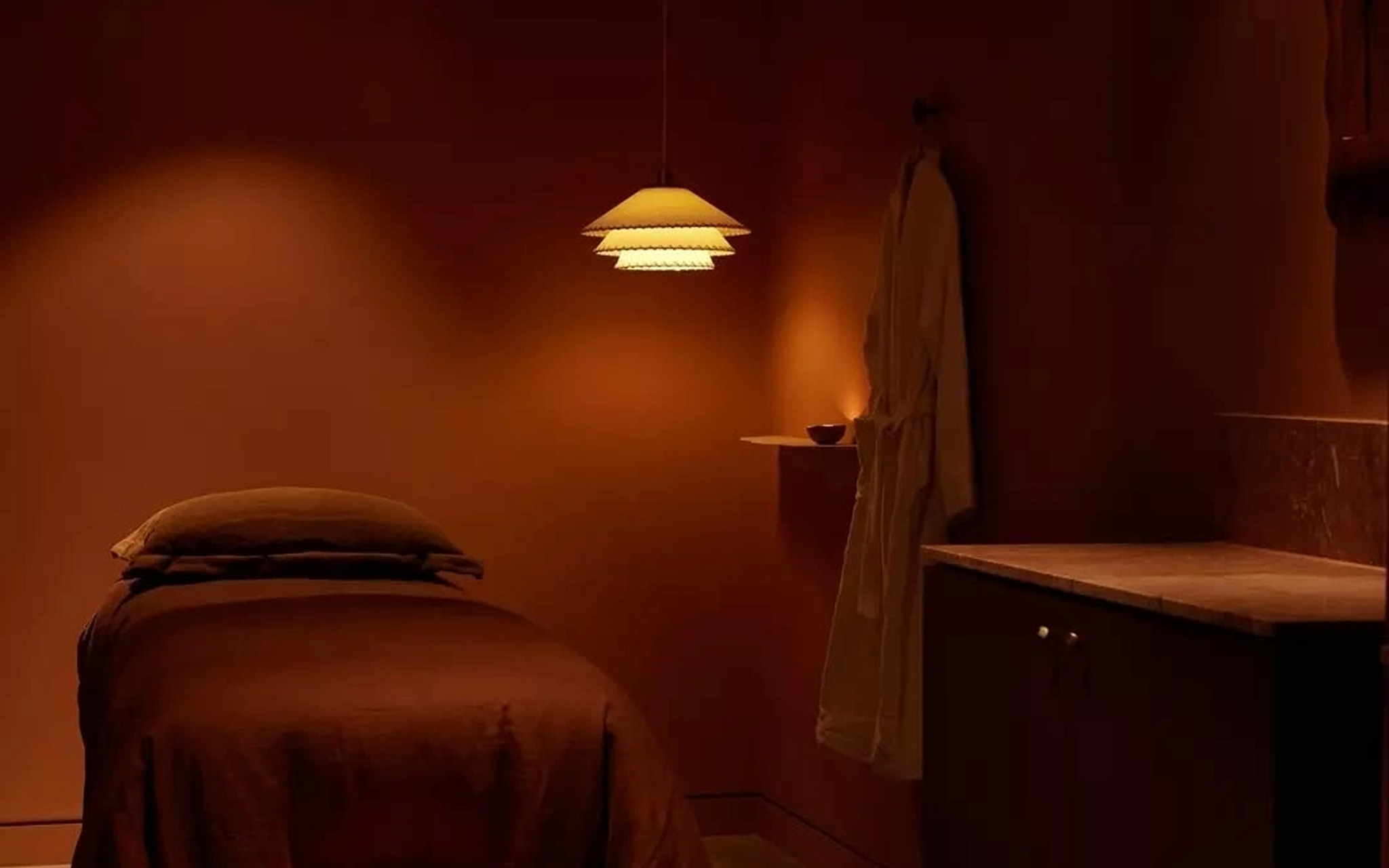
The challenge sat between physical product and digital platform. The same interface had to guide a first-time client, give a facilitator live control while a session was in progress, and continue the experience on a phone the next morning. Built conventionally, that would become embedded UI in one stack, a facilitator interface in another, and a mobile app in a third: three teams, three release cycles, and a product that feels divided at the exact moment it needs to feel whole.
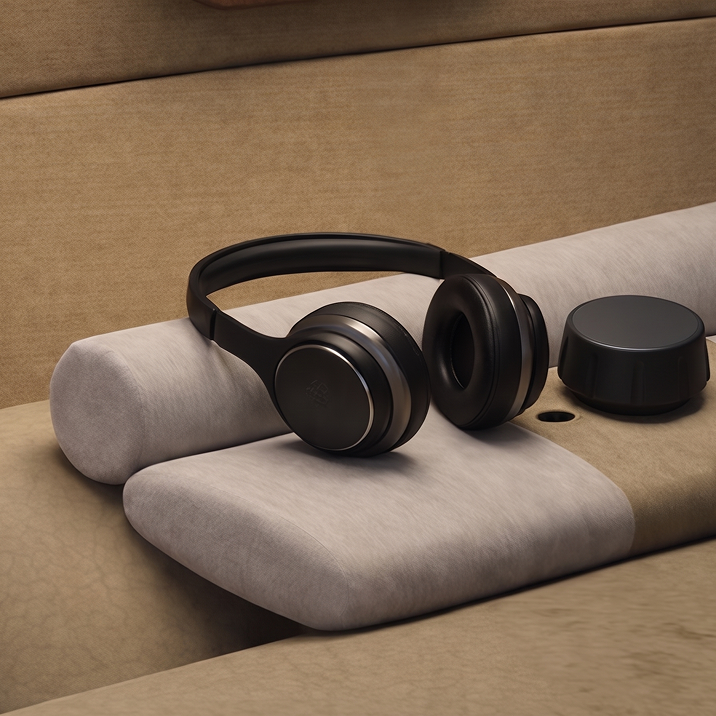
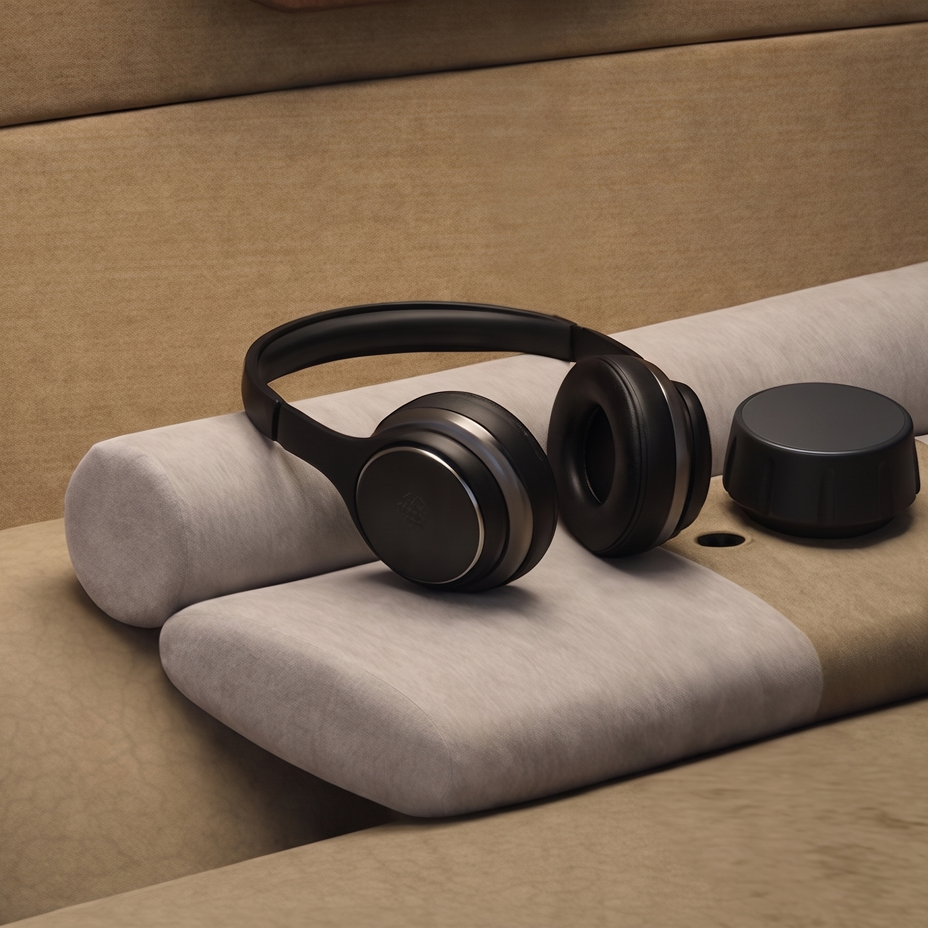
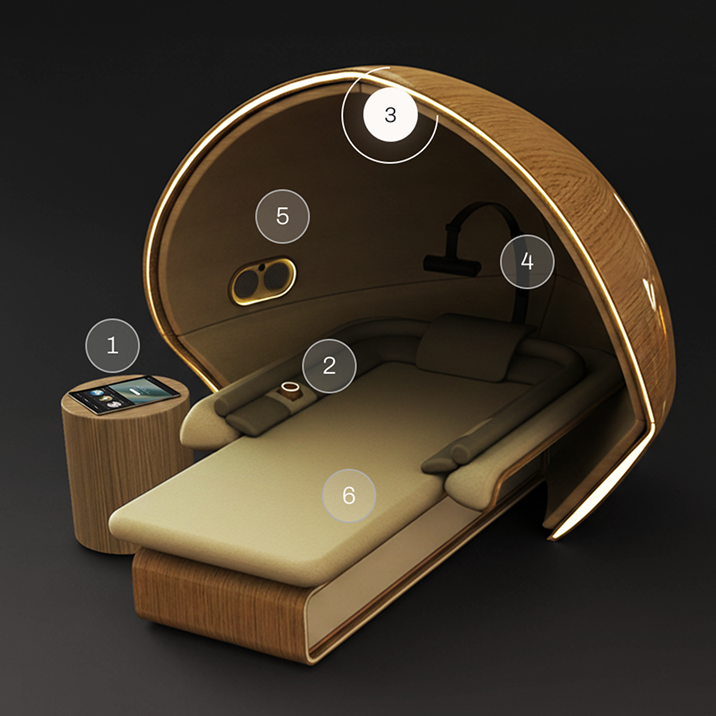
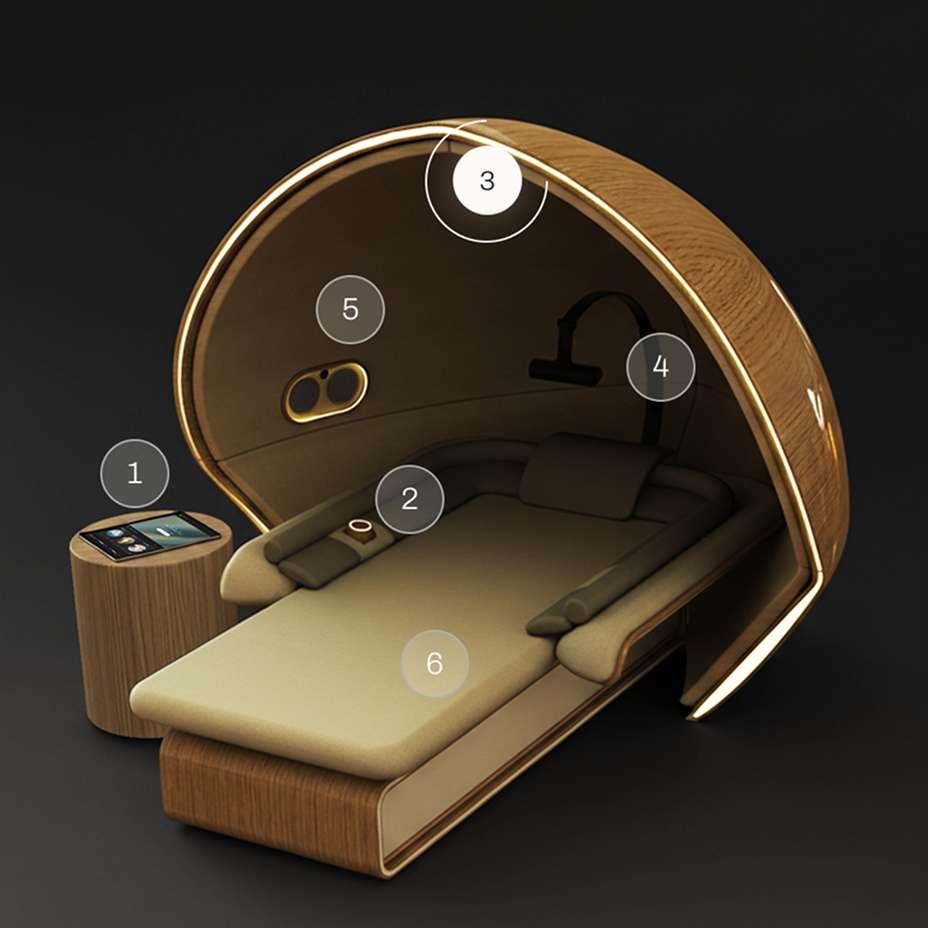
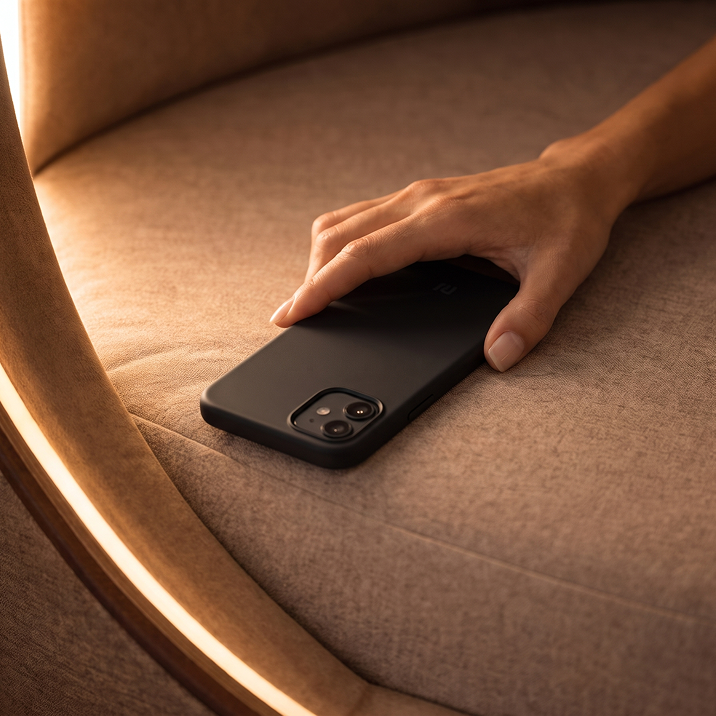
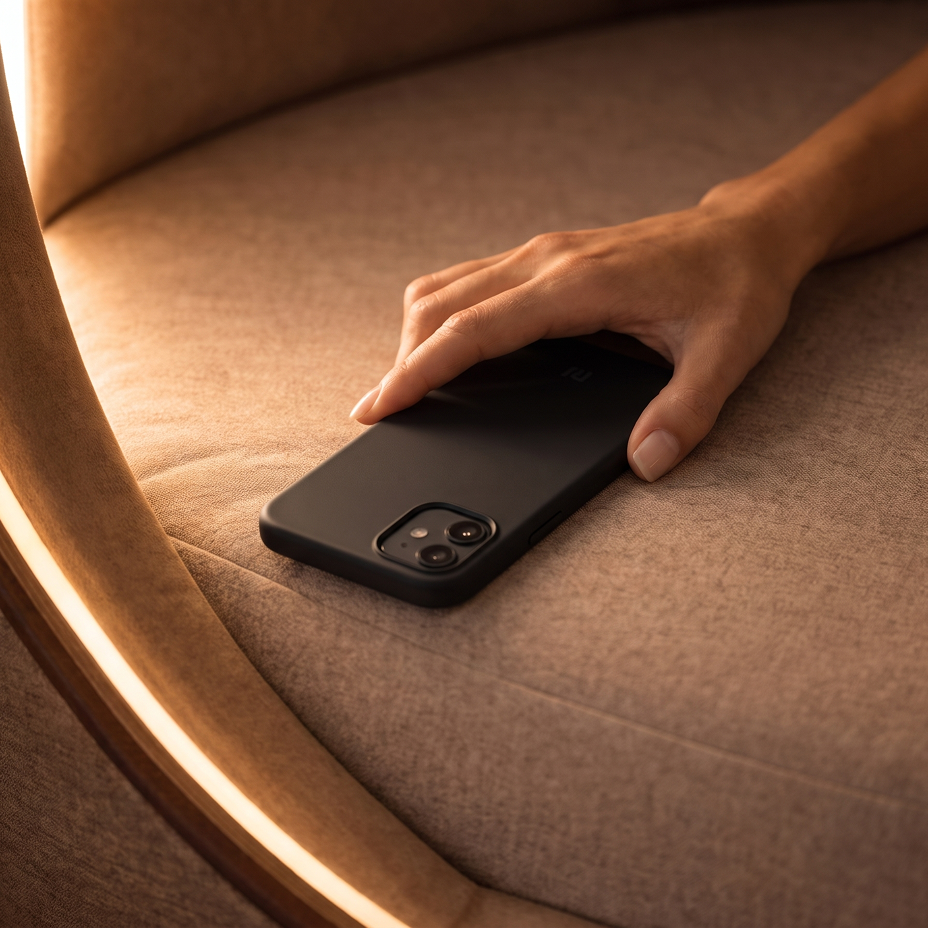
We assessed building on an existing operating system against building proprietary and selected Flutter as the on-device software foundation. Flutter runs the built-in console, the session engine, and the synchronized output of every light, motor, and audio channel. The same framework carries the companion app, so the console a client touches while lying down and the app they open the next morning share one interaction model and one codebase.
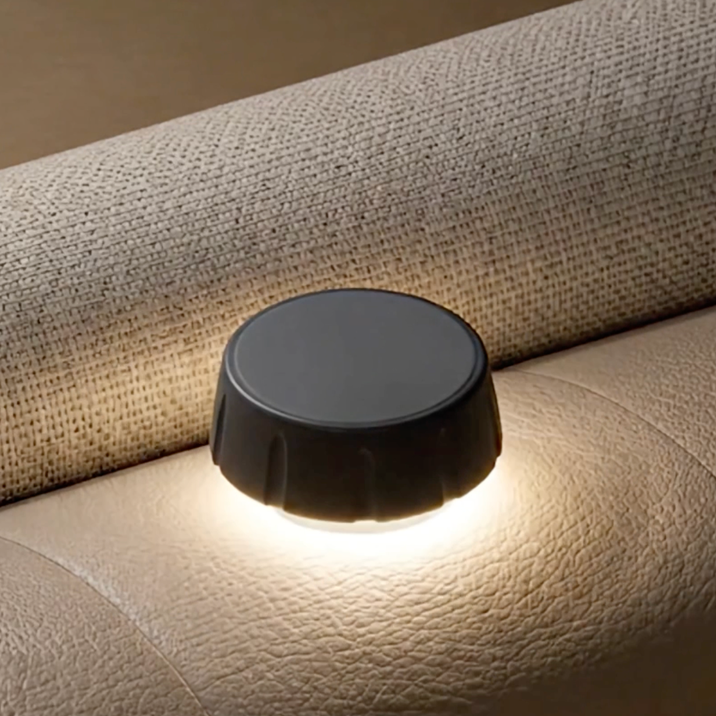
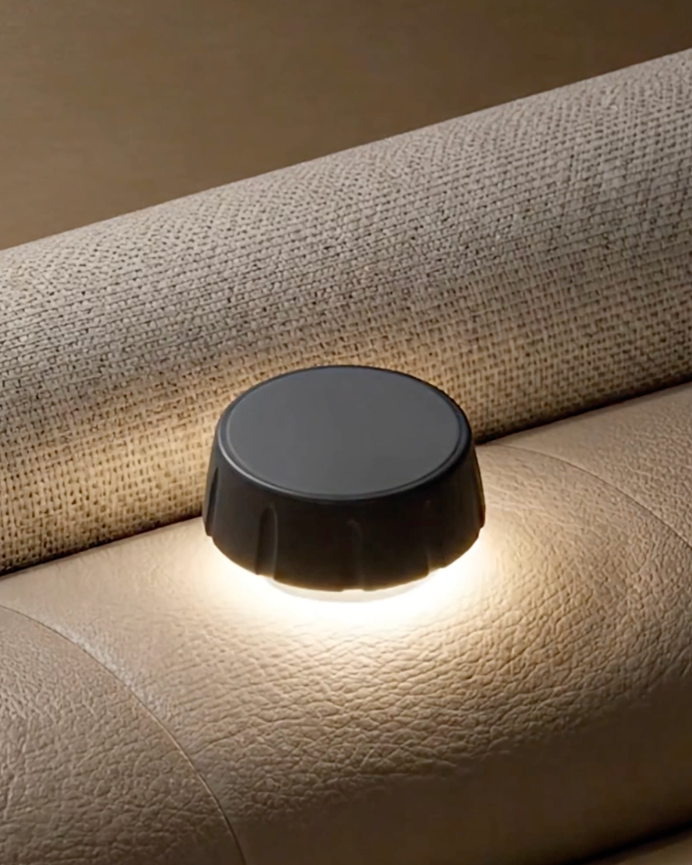
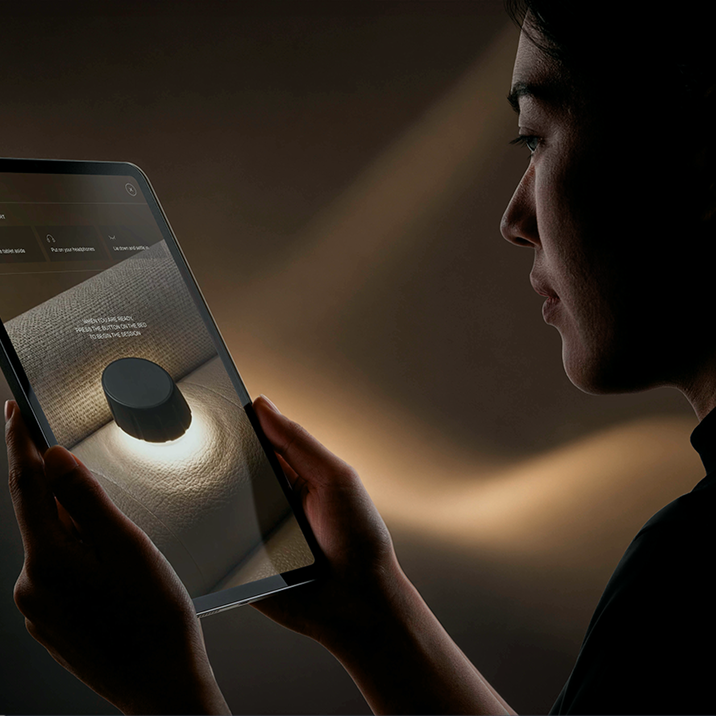
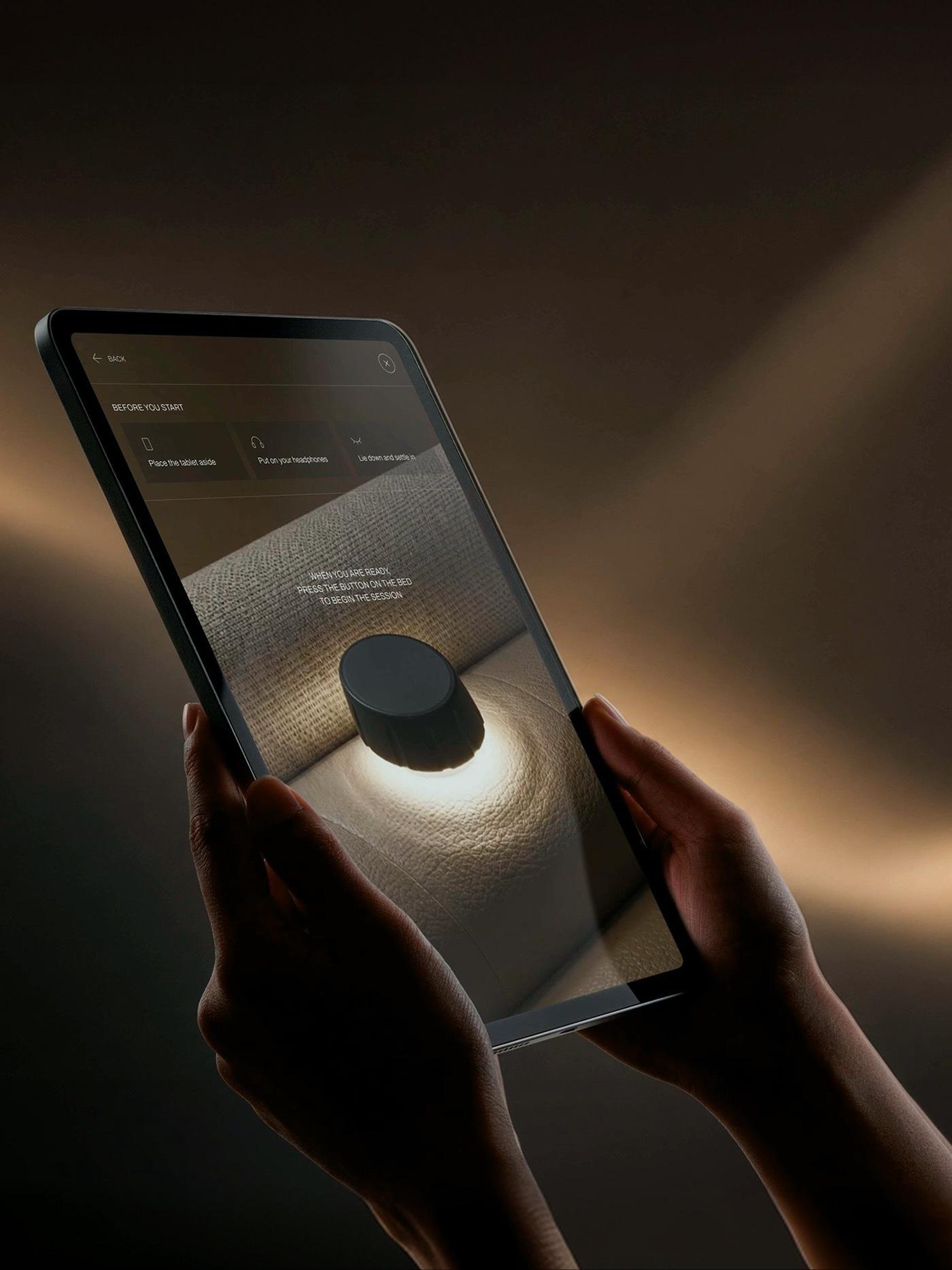
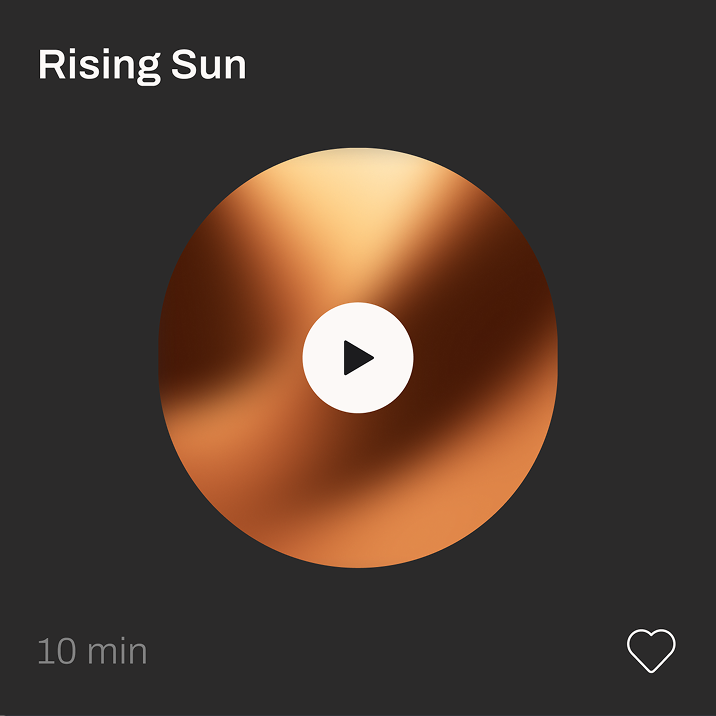
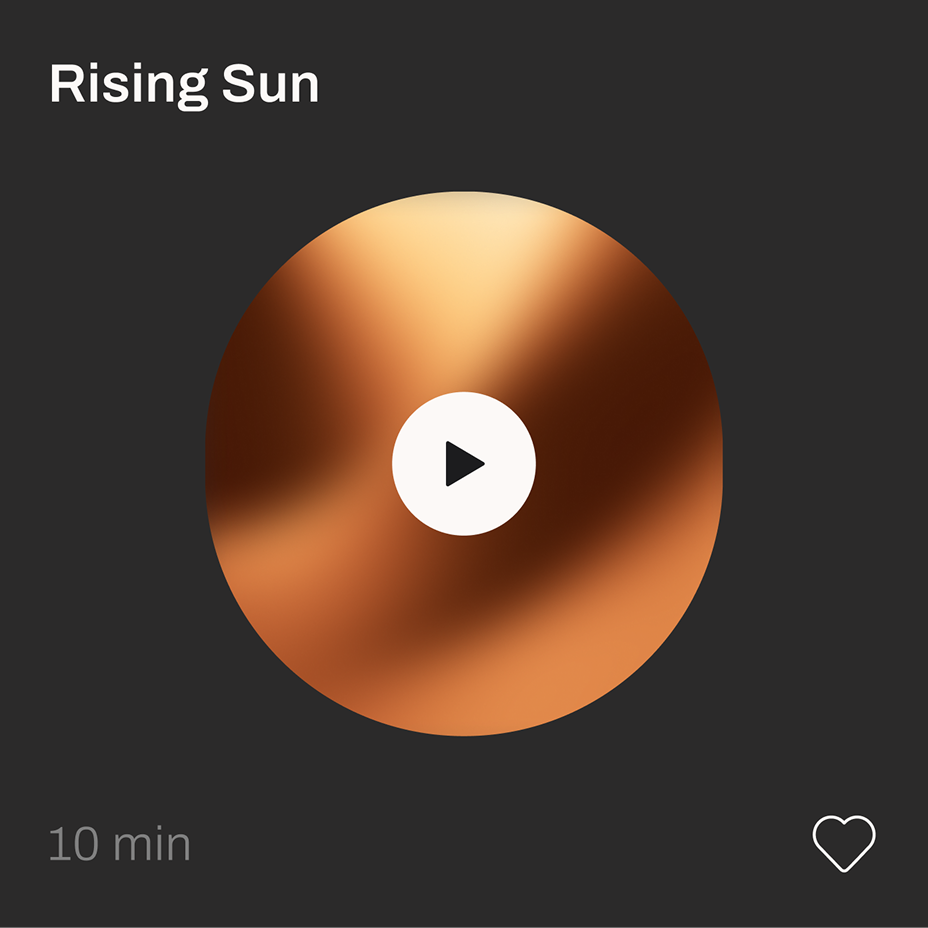
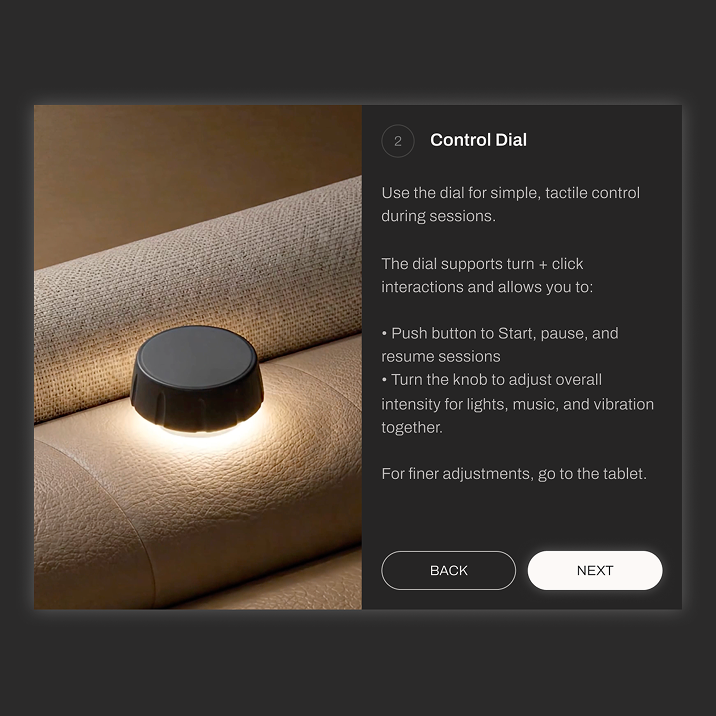
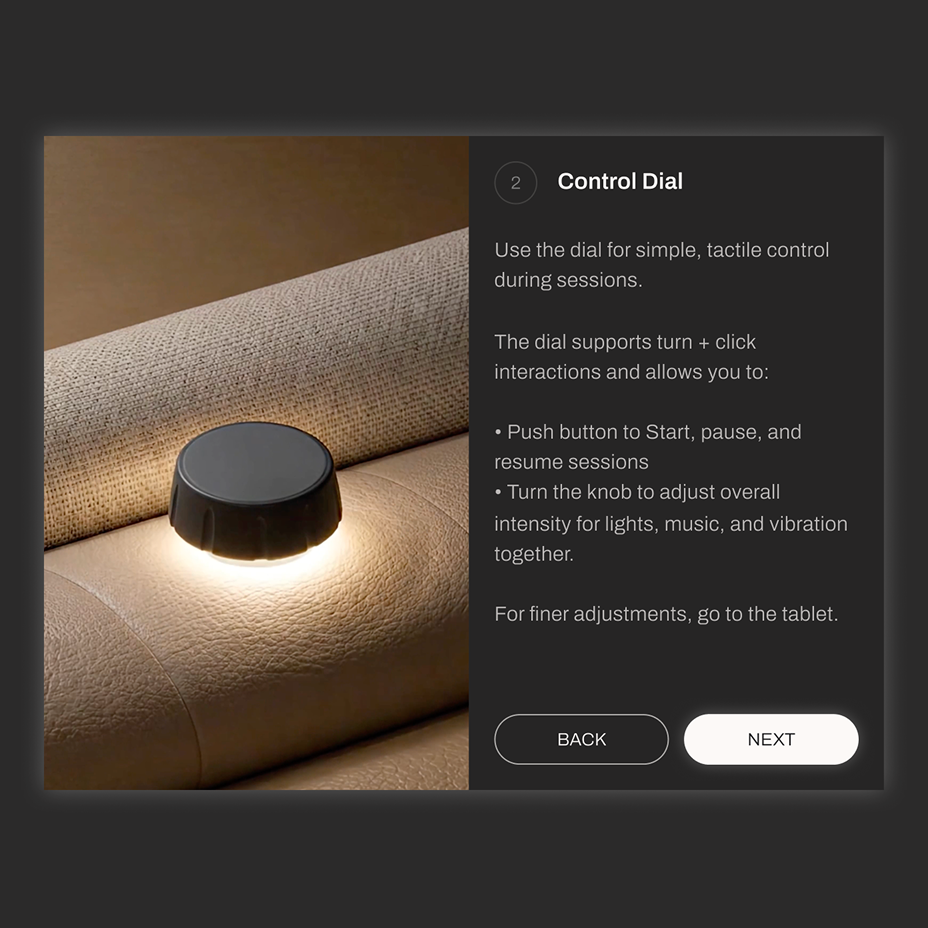
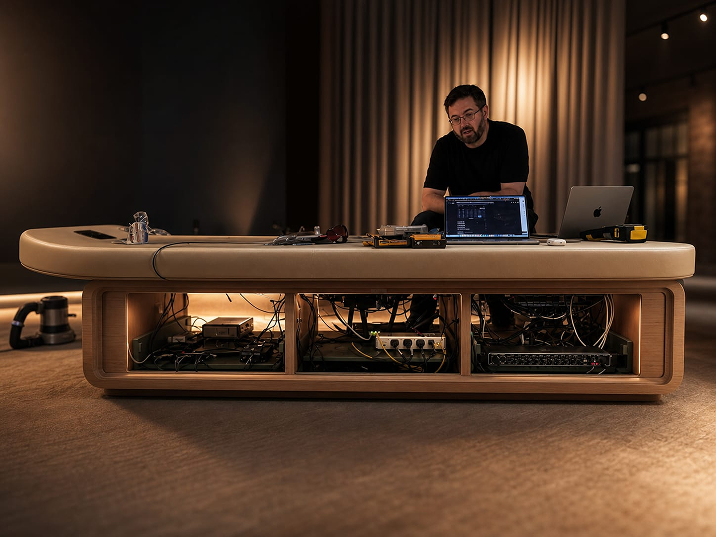
Getting there took the full L+R Alliance. Strategy defined the three operator journeys the interface had to serve, Design built an interface legible in near-darkness, and Engineering wrote the software against boards our electrical engineers designed. Timing between what a person hears and what they feel was resolved in the architecture, because the same team owned the software, boards, and industrial decisions that shaped how someone reaches the console mid-session.
New session types and interface work can now reach the console and app together instead of through separate release cycles. The software layer carries forward to the S:7 and S:5 without a rebuild, giving SATYA a device platform rather than a one-off embedded interface.
The result is one codebase, one product language, and one roadmap for a family of connected wellness devices.