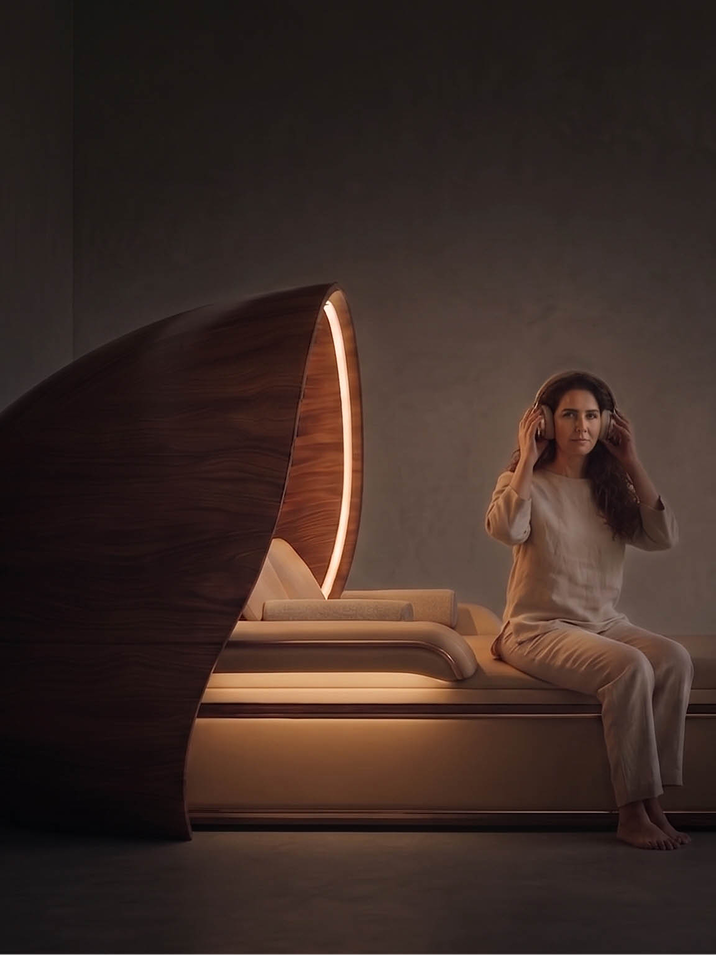
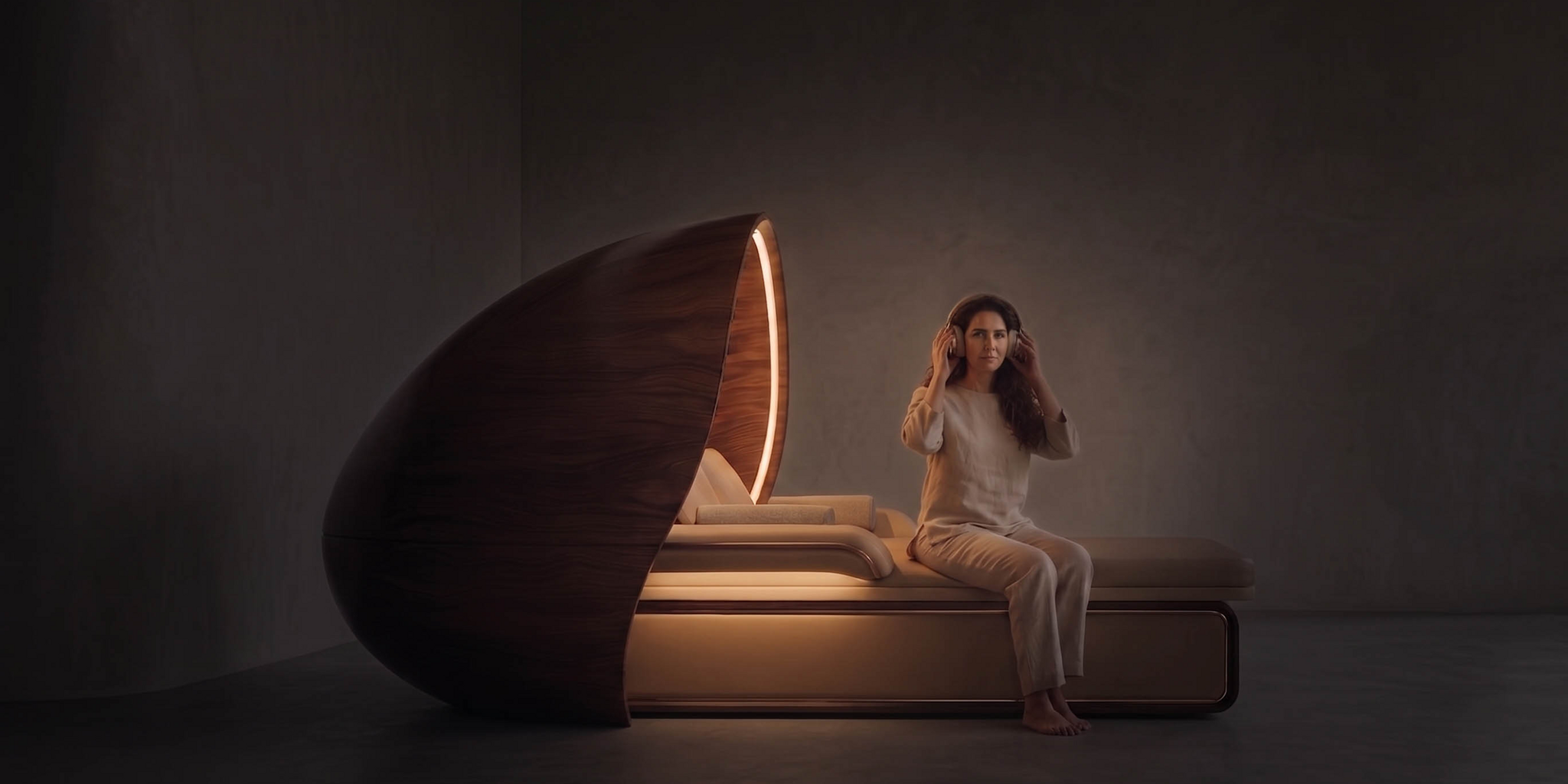
A premium connected wellness device is only as strong as the sessions written for it. The SATYA S:9 combines sound, therapy light, RGB LEDs, and vibroacoustic motors inside one immersive physical product. Each output can shape the experience, which means the content model has to treat the device less like a playback system and more like an instrument.


The challenge was the distance between familiar audio production and a device with no authoring standard. Existing tools can sequence sound, but they do not sequence sound alongside individually addressable light and haptics on a shared timeline. Without a production tool, every session would have to be hand coded by engineers, leaving the composers, producers, and practitioners most qualified to write these experiences outside the ecosystem they needed to shape.
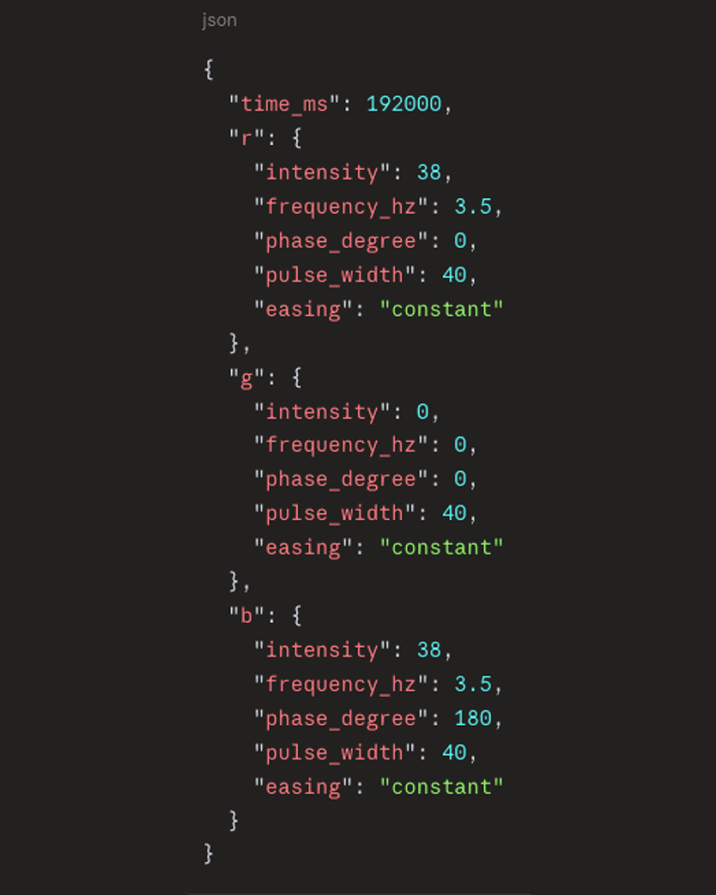
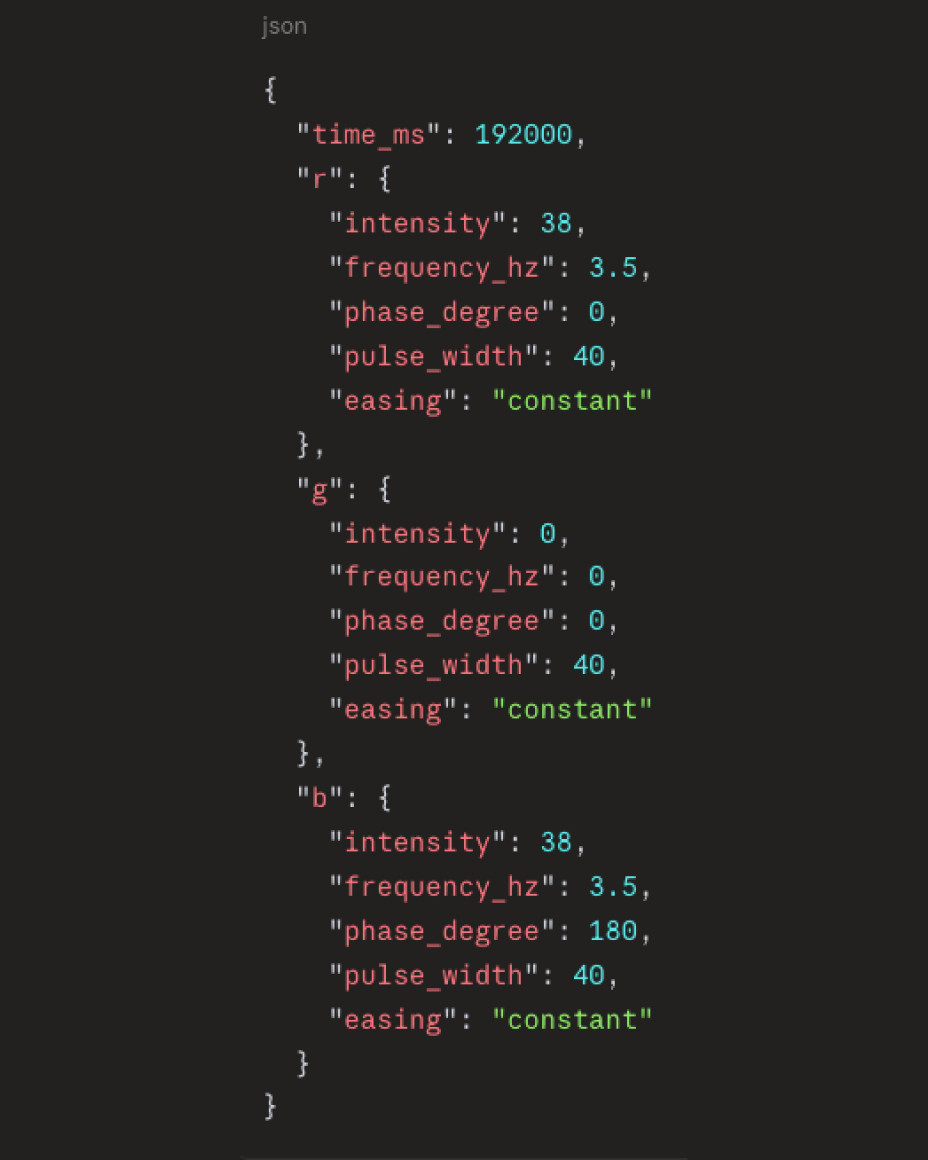

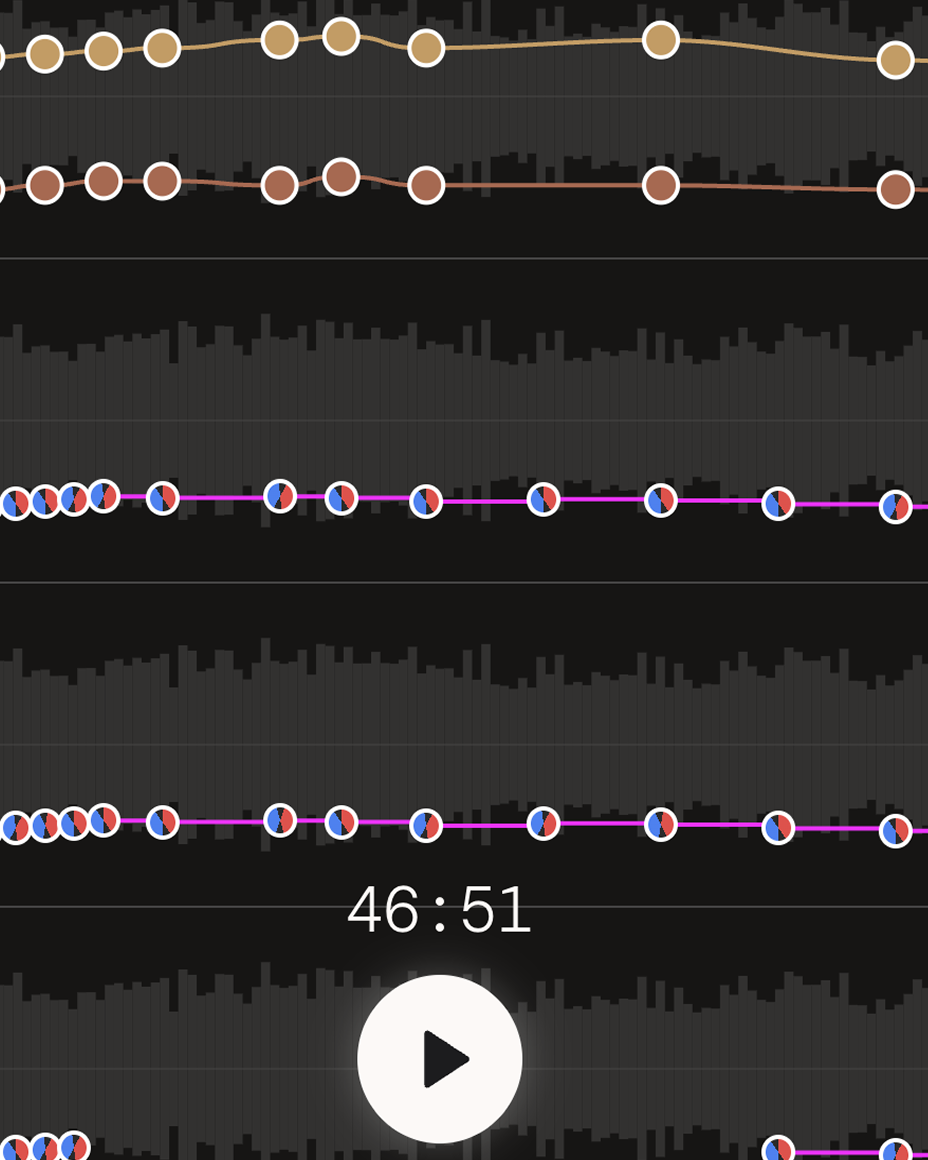
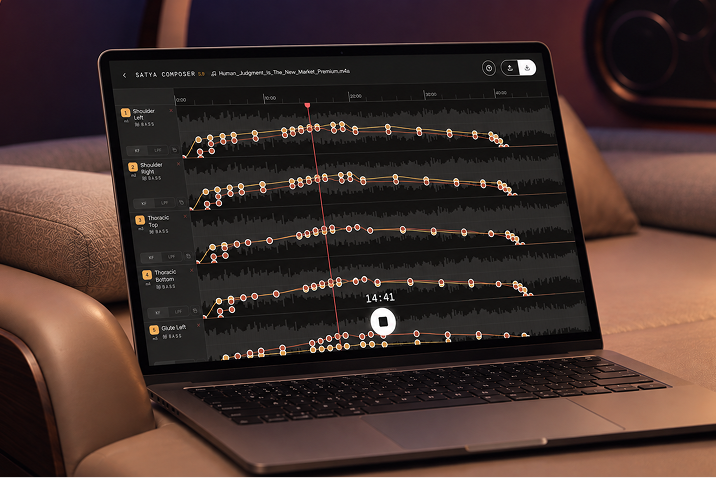
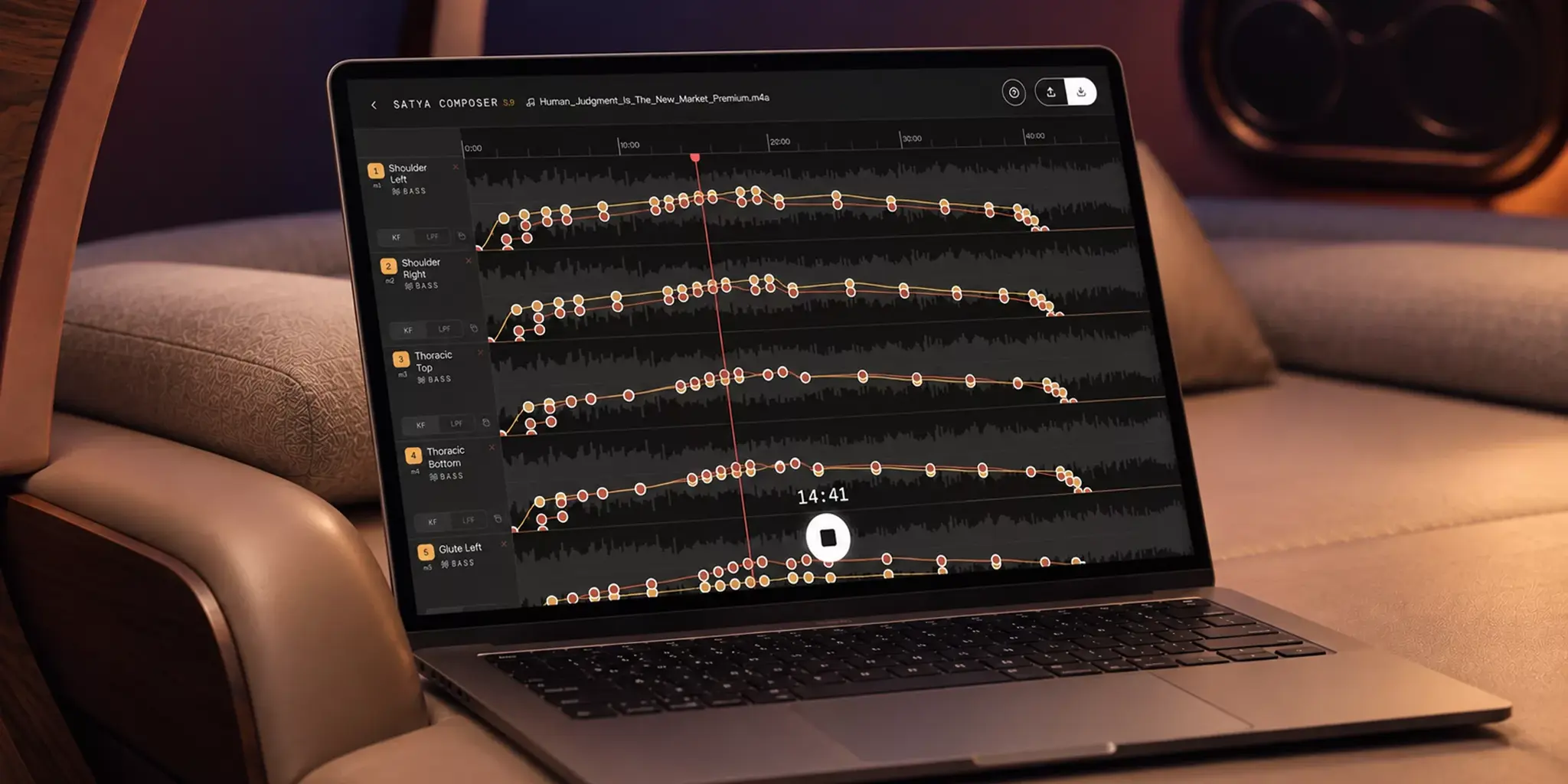
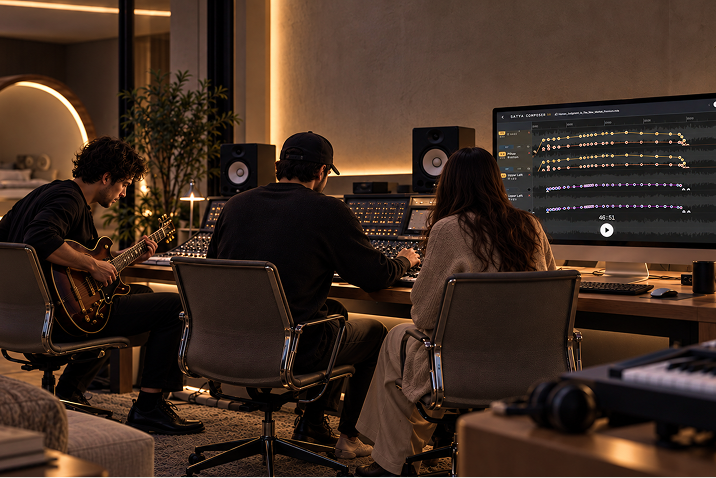
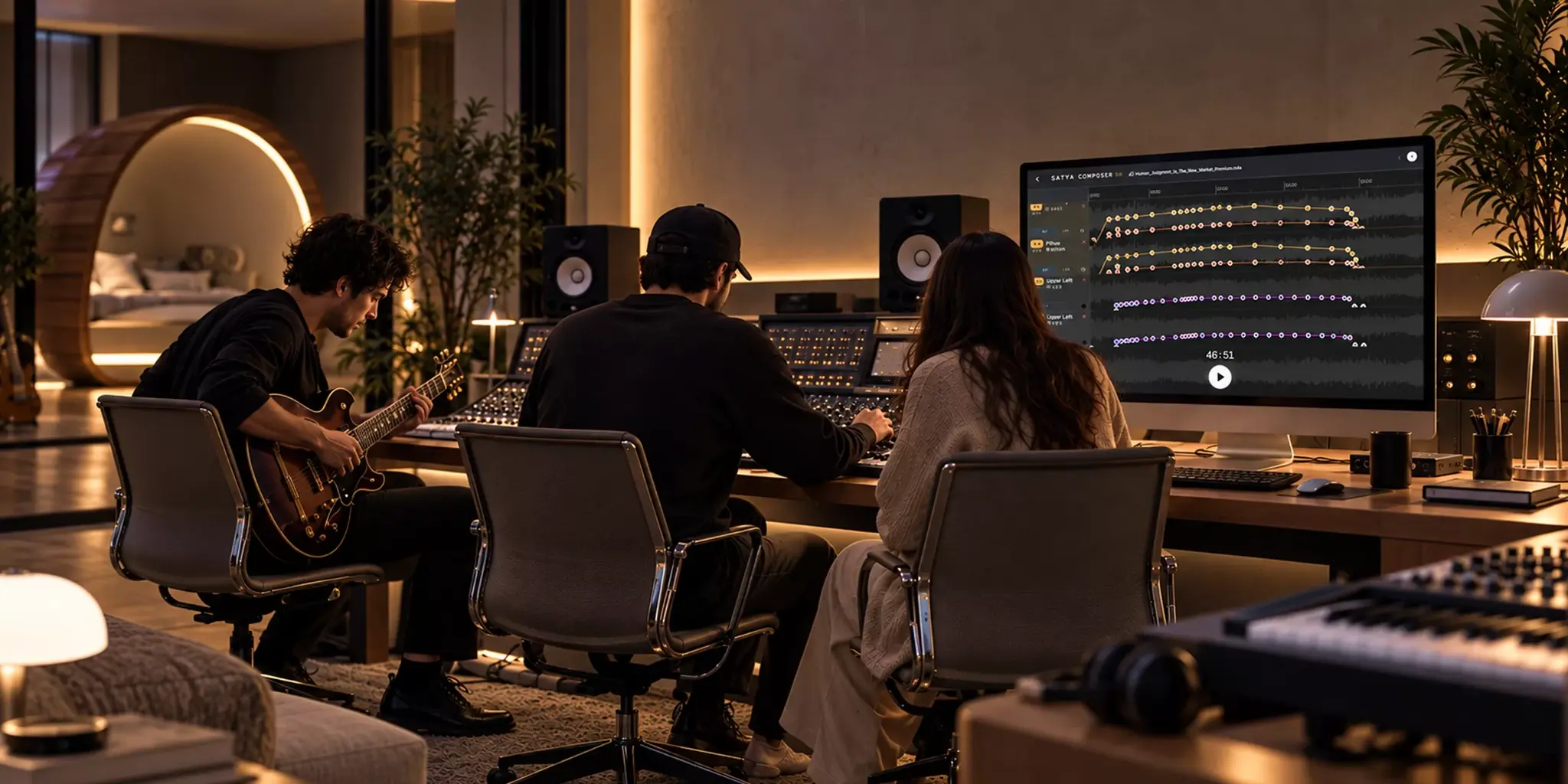
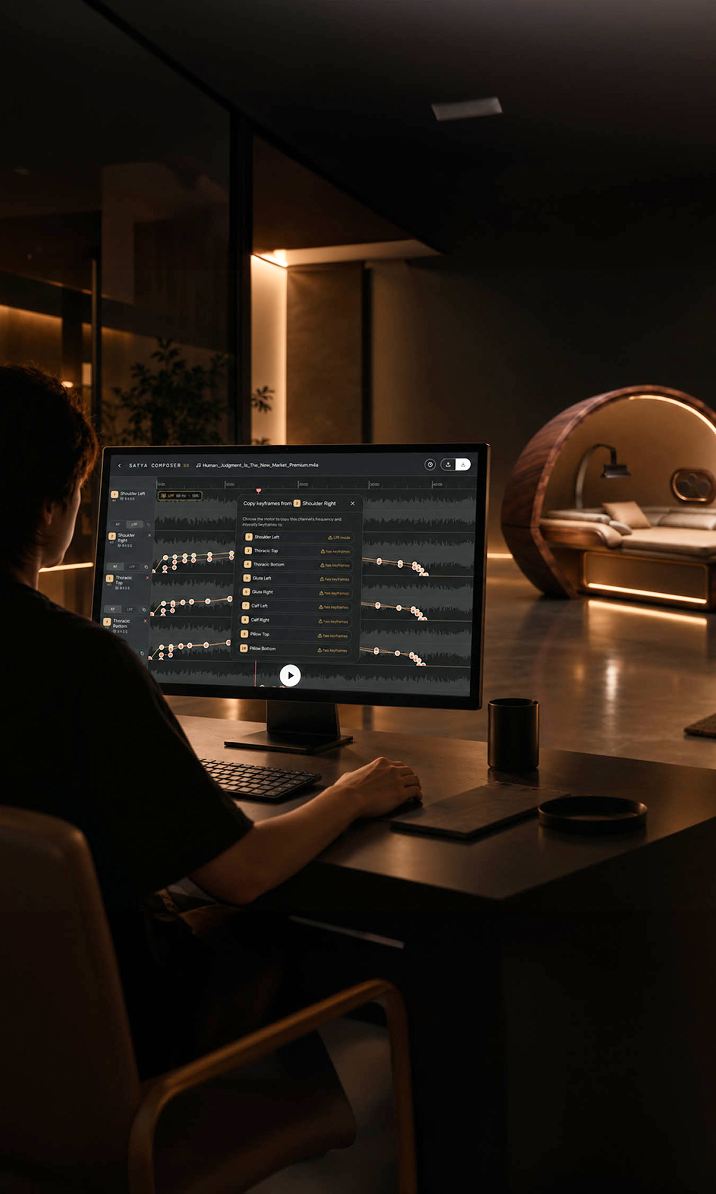
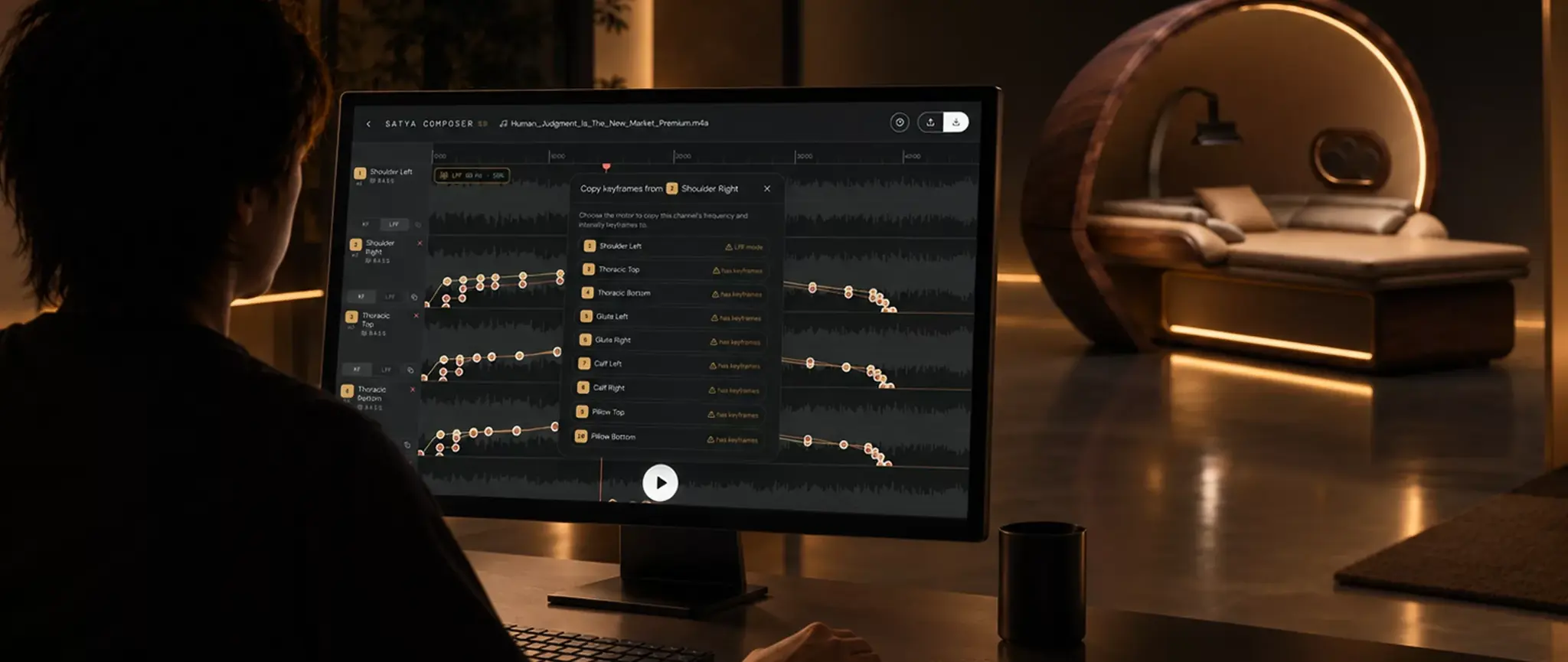
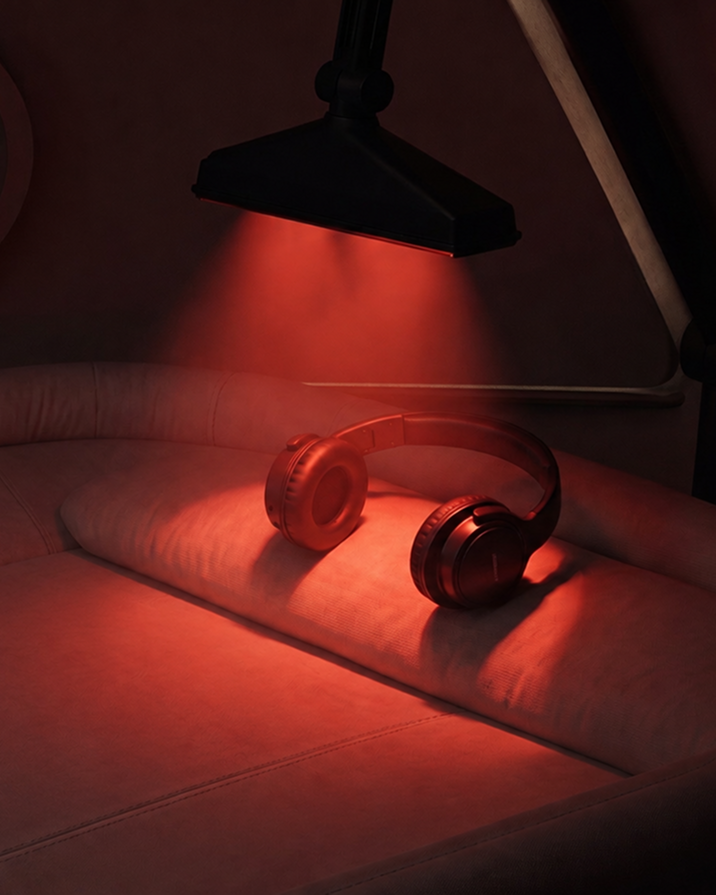
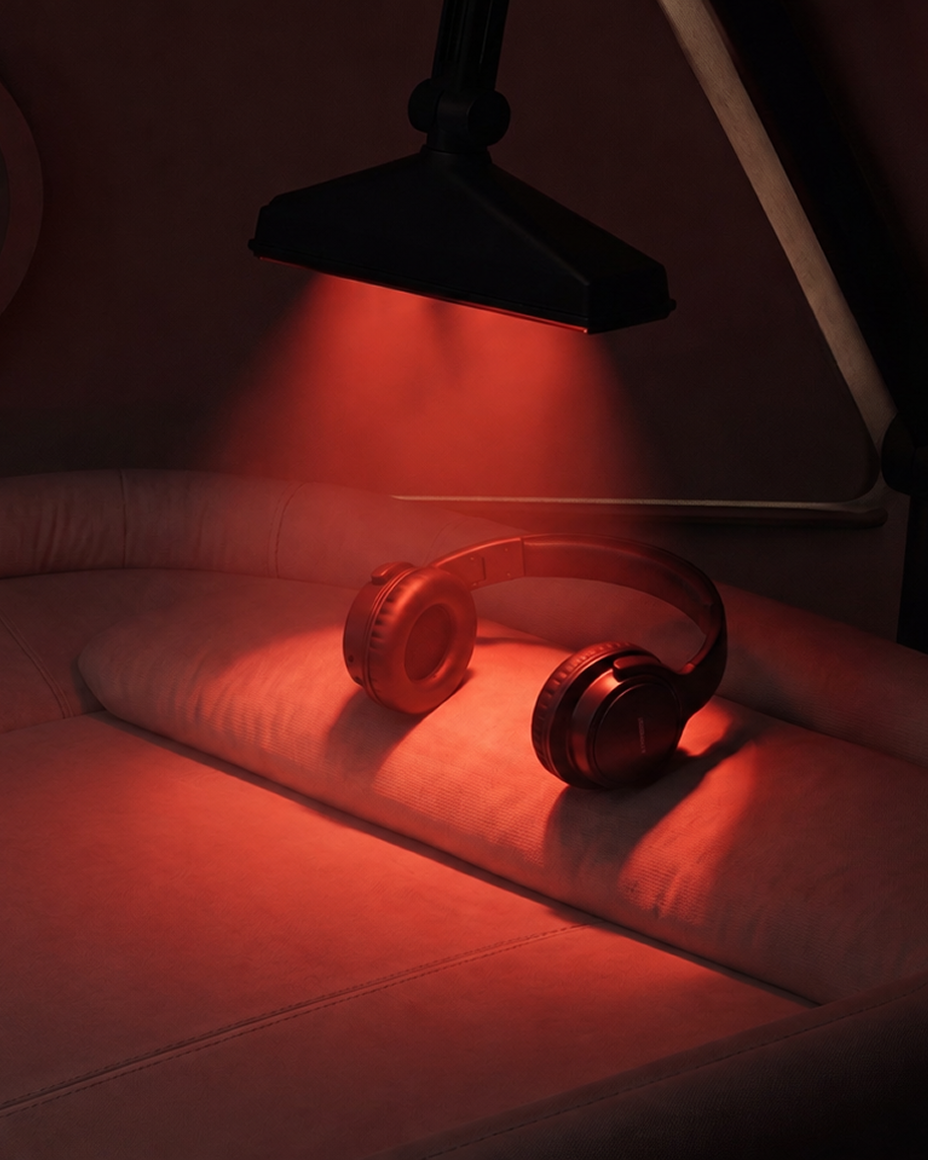
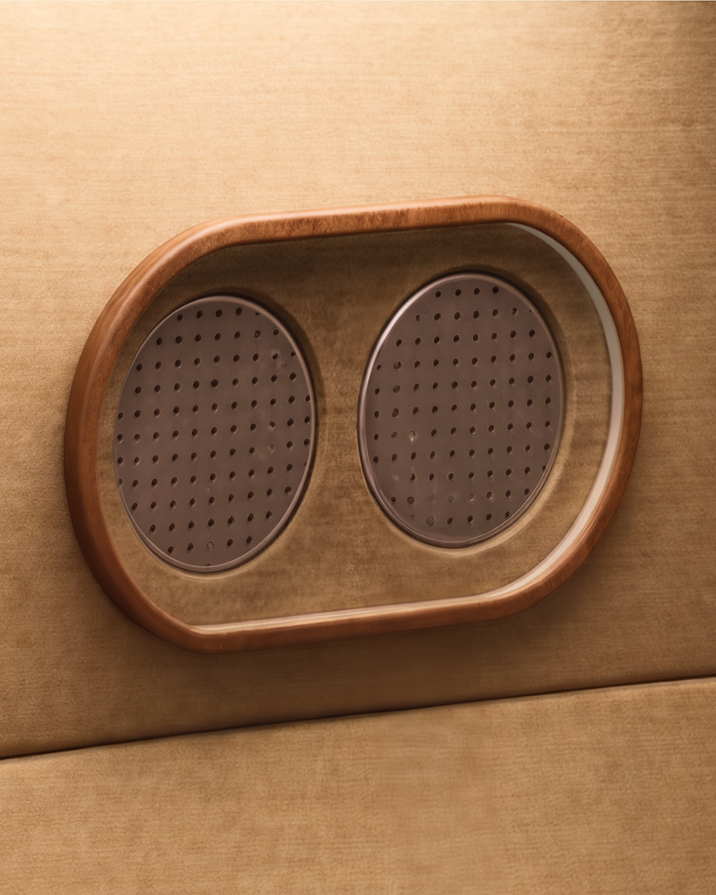
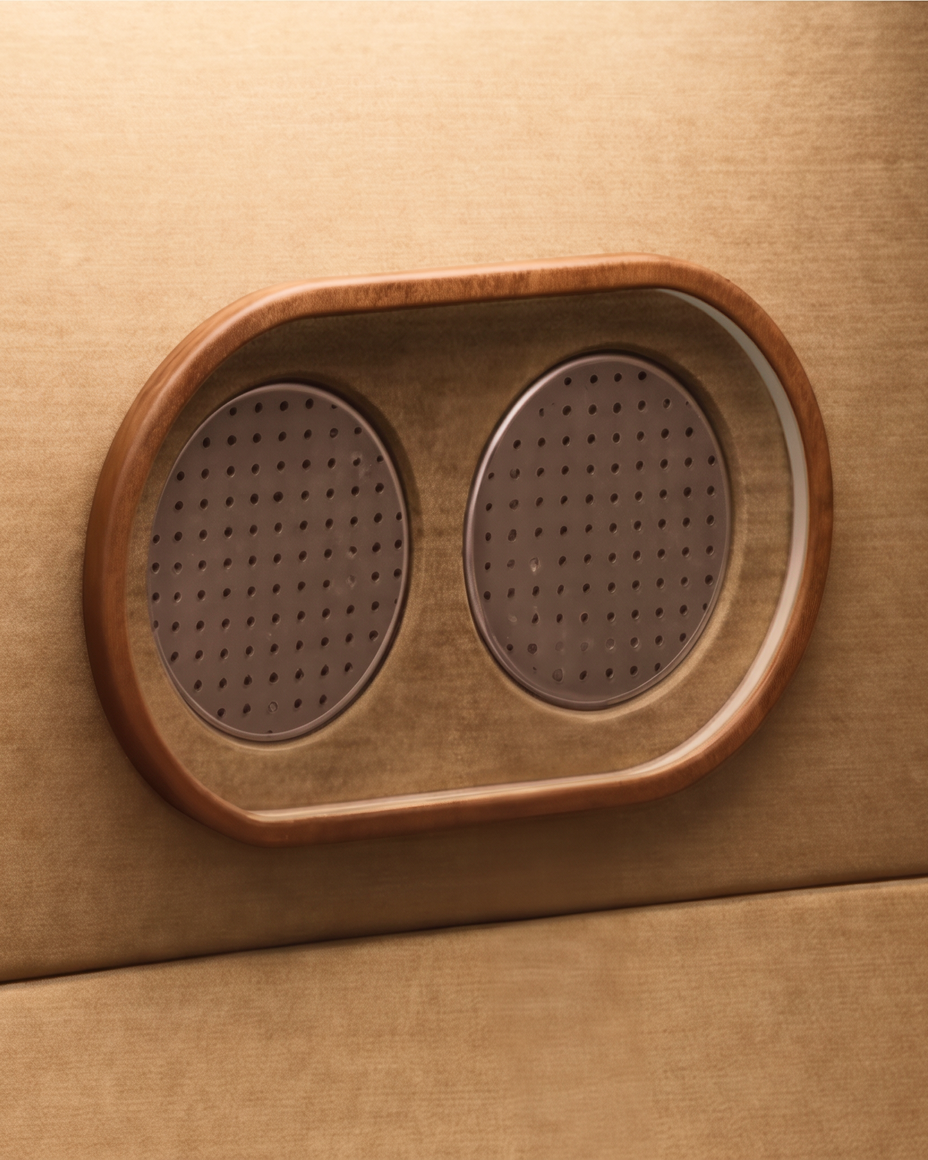
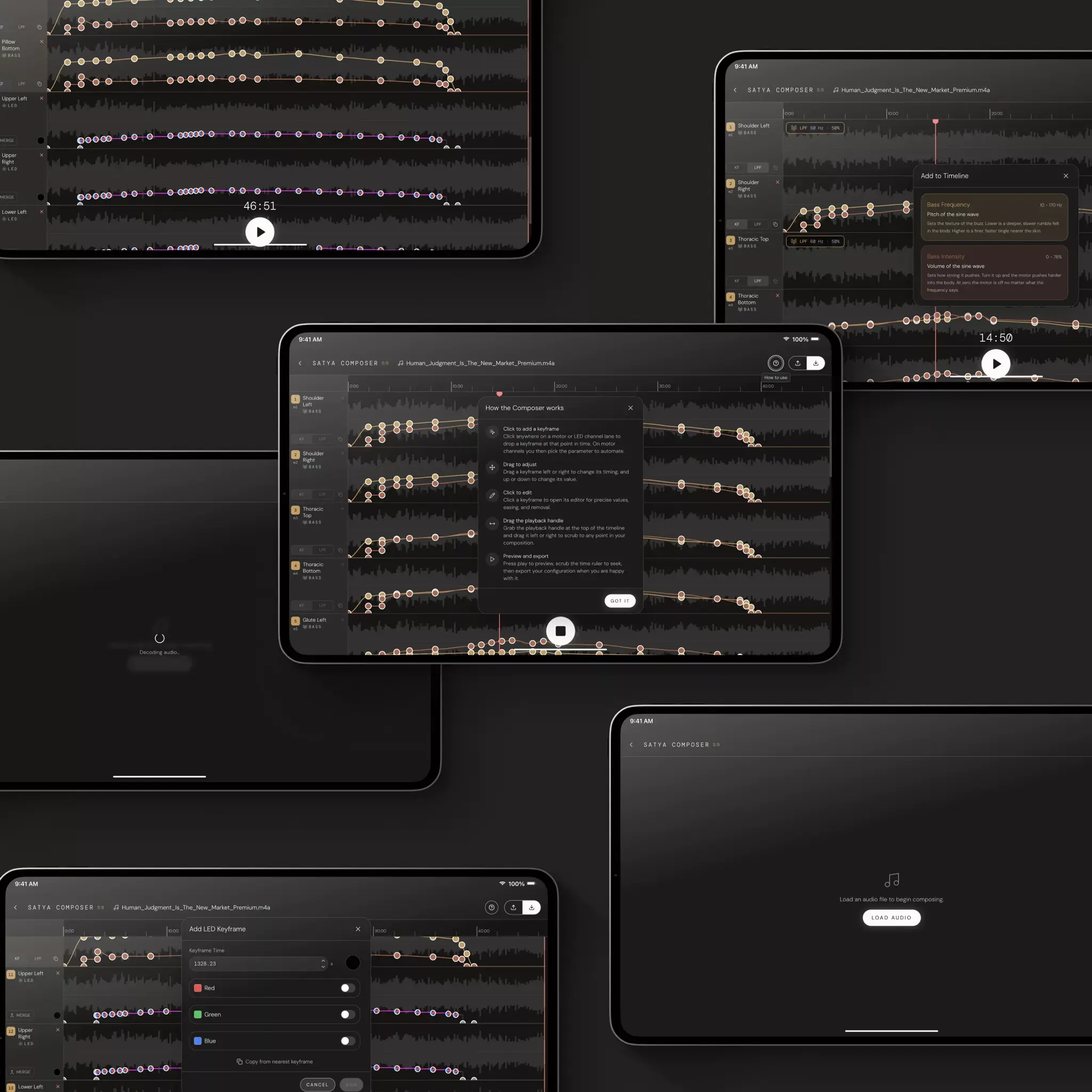
Working with the SATYA team, we designed and built SATYA Composer, a proprietary DAW for the S:9. Every device output appears as its own track: each RGB LED across the bed, all ten vibroacoustic motors, the hood speakers, the headphone channel, and the therapy light system. The interface gives specialists a familiar timeline for arrangement, layering, automation, and publishing directly to the device.
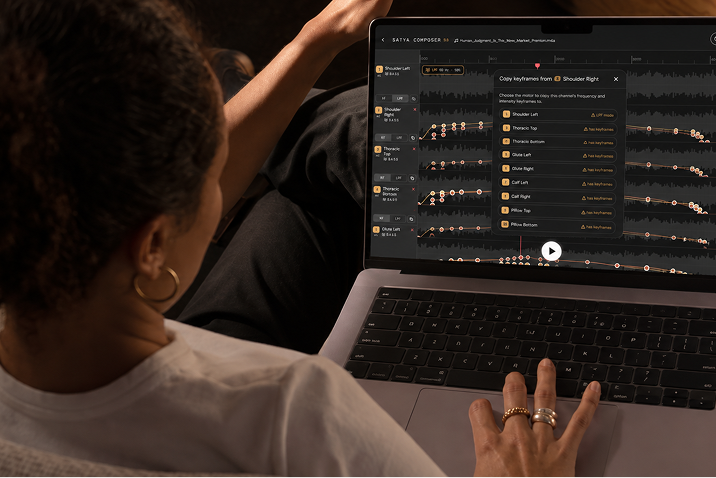
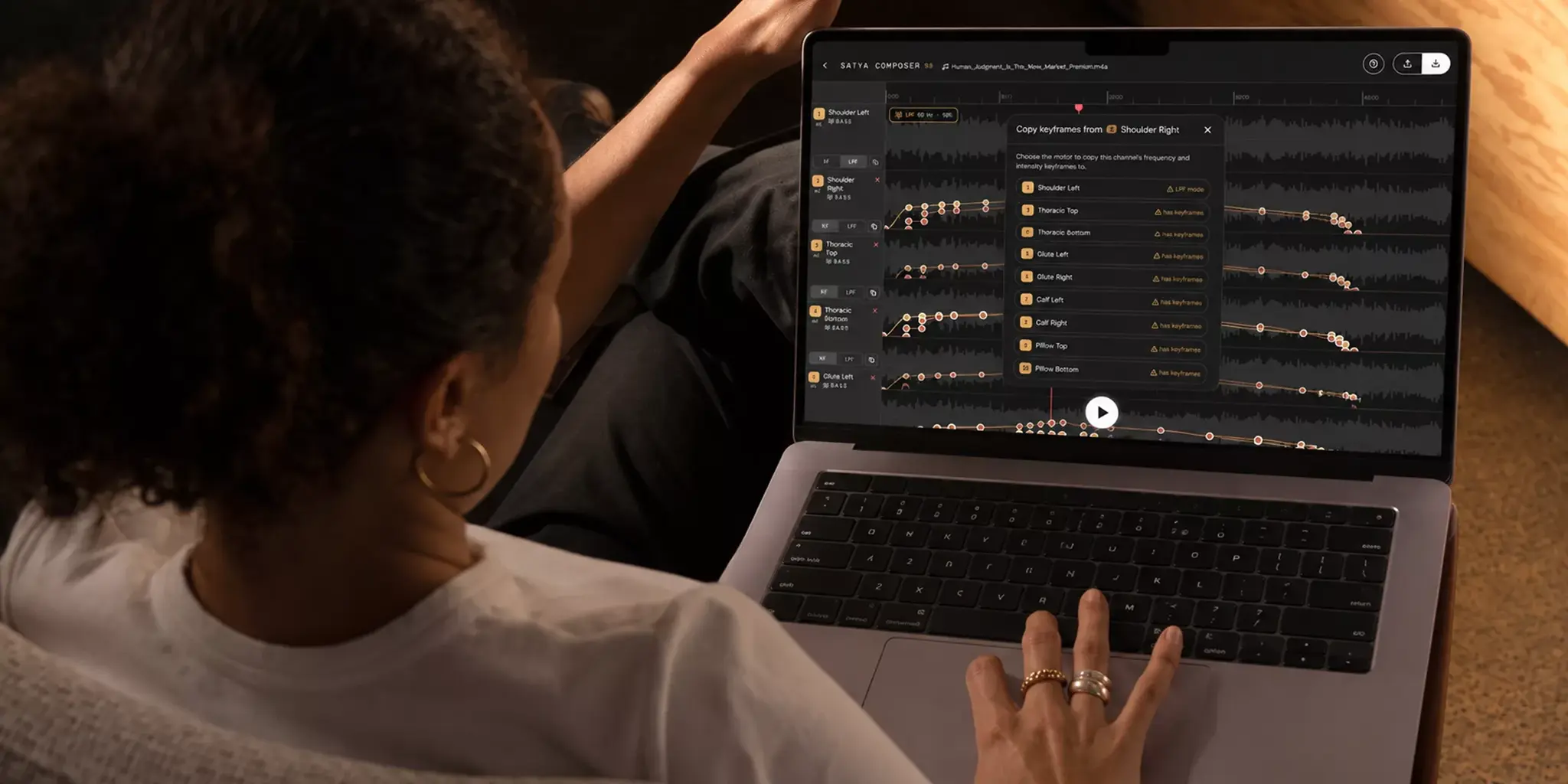


AI-assisted signal processing does the translation work underneath. Composer processes audio, light, and vibration signals so the three behave as one arrangement rather than unrelated timelines a user has to keep aligned by hand. Strategy, Design, and Engineering shaped the workflow together, making the interface legible to a music producer and precise enough for a practitioner writing for the nervous system.
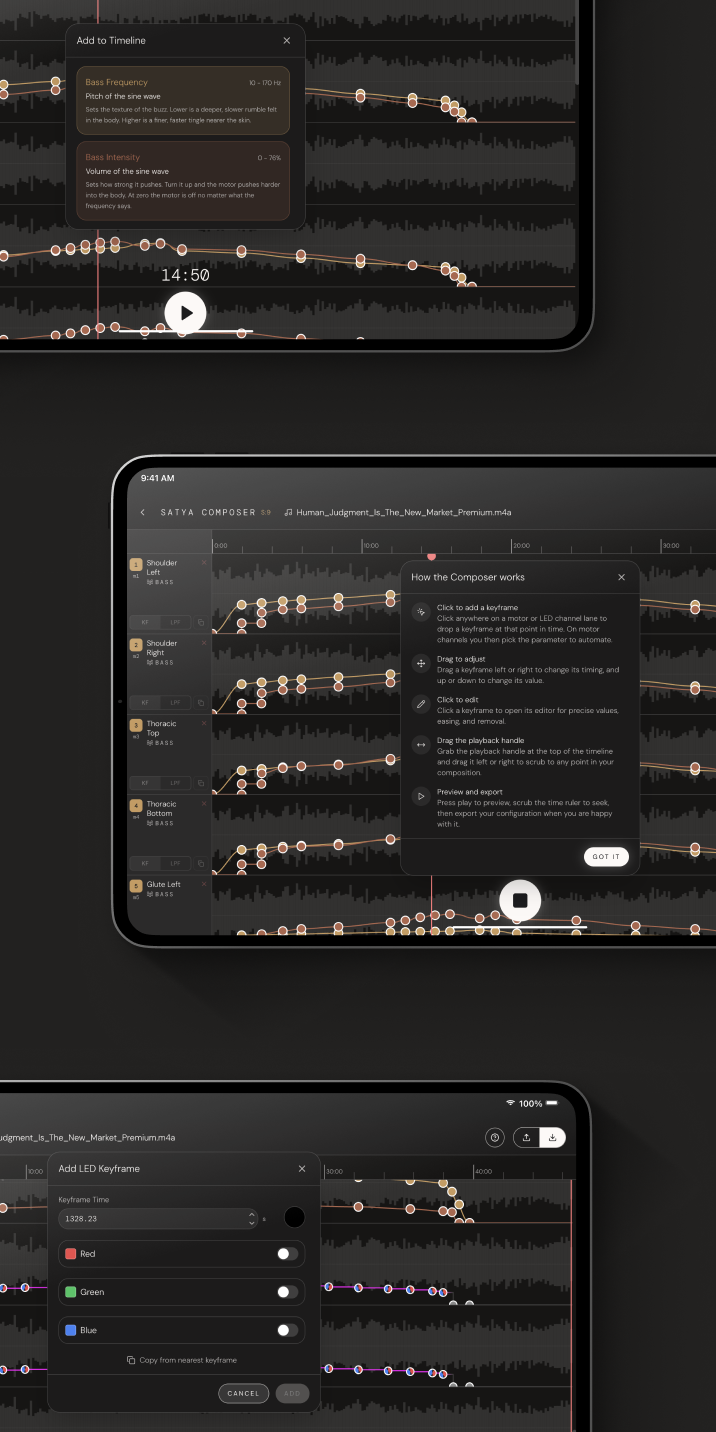
SATYA now owns the tool that makes its content. The session library can grow without engineering time attached to every new piece, and outside composers and practitioners can be brought into the platform with a production environment built for the device itself. The authoring layer becomes part of SATYA's position, not a dependency on software someone else controls.