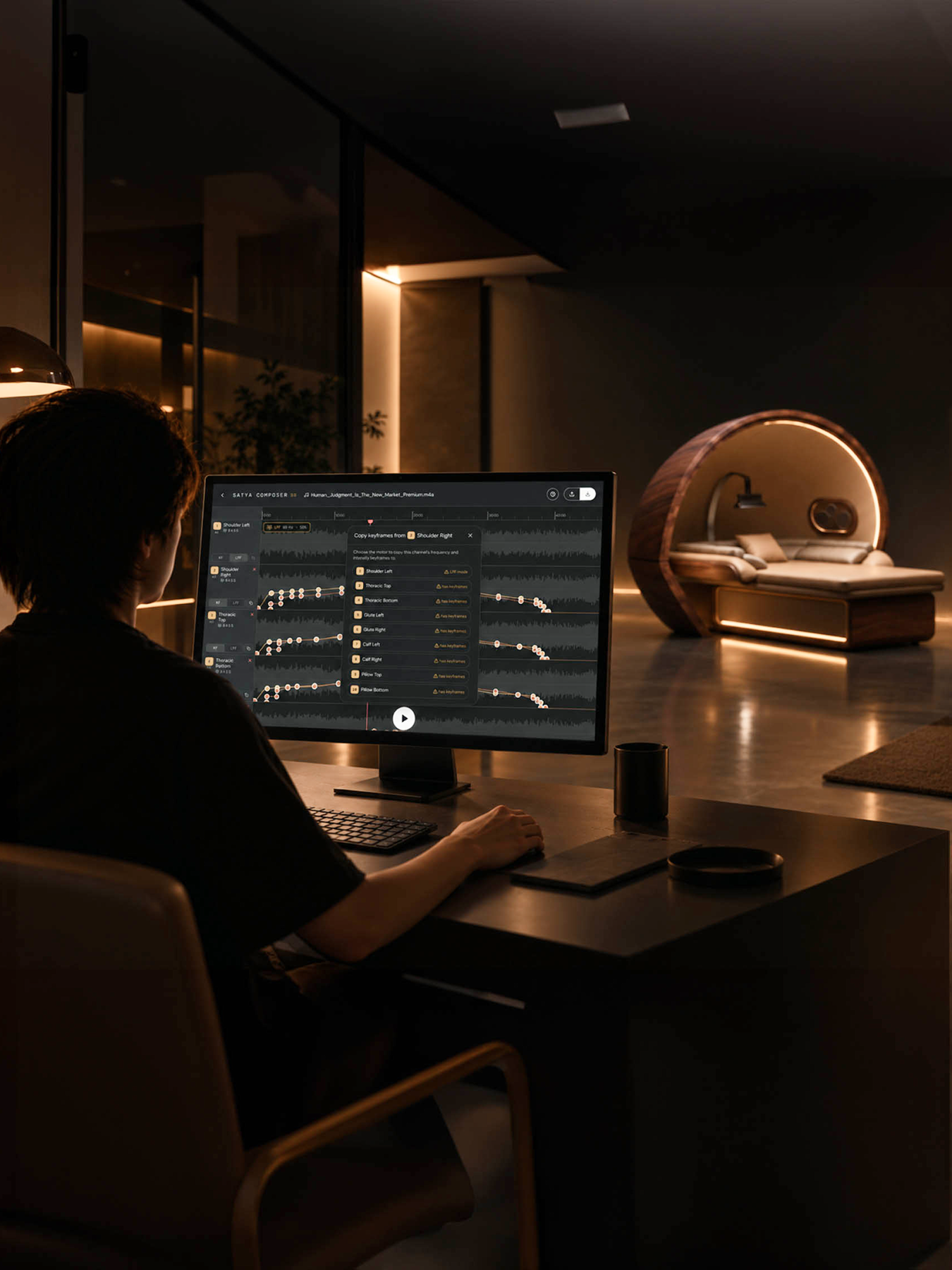
The SATYA S:9 is a premium connected wellness device a person lies inside. Its proportions, hood geometry, bed height, console position, and approach path are not secondary design details; they are the product. To evaluate the object honestly, the team needed to understand how it would meet a body in space, not how it appeared in a rendered frame.
The challenge was the gap between physical scale and flat-screen approval. Renderings ask every stakeholder to imagine size, clearance, and presence, and each person imagines them differently. Full-size prototypes are slower and more expensive to iterate, so decisions about how the object feels to approach were at risk of being made against pictures rather than the object itself.
SATYA came through L+R's Immersive Operations accelerator, a structured program for virtualizing physical operations through spatial computing. We used ShapesXR on Meta Quest for live cross-department iteration, placing industrial design, engineering, and the production partner inside the same volume at once. Cable runs, component fit, subassembly clearance, and the meeting point between hood, bed, base, and console could be reviewed while everyone responsible for the decision was present.

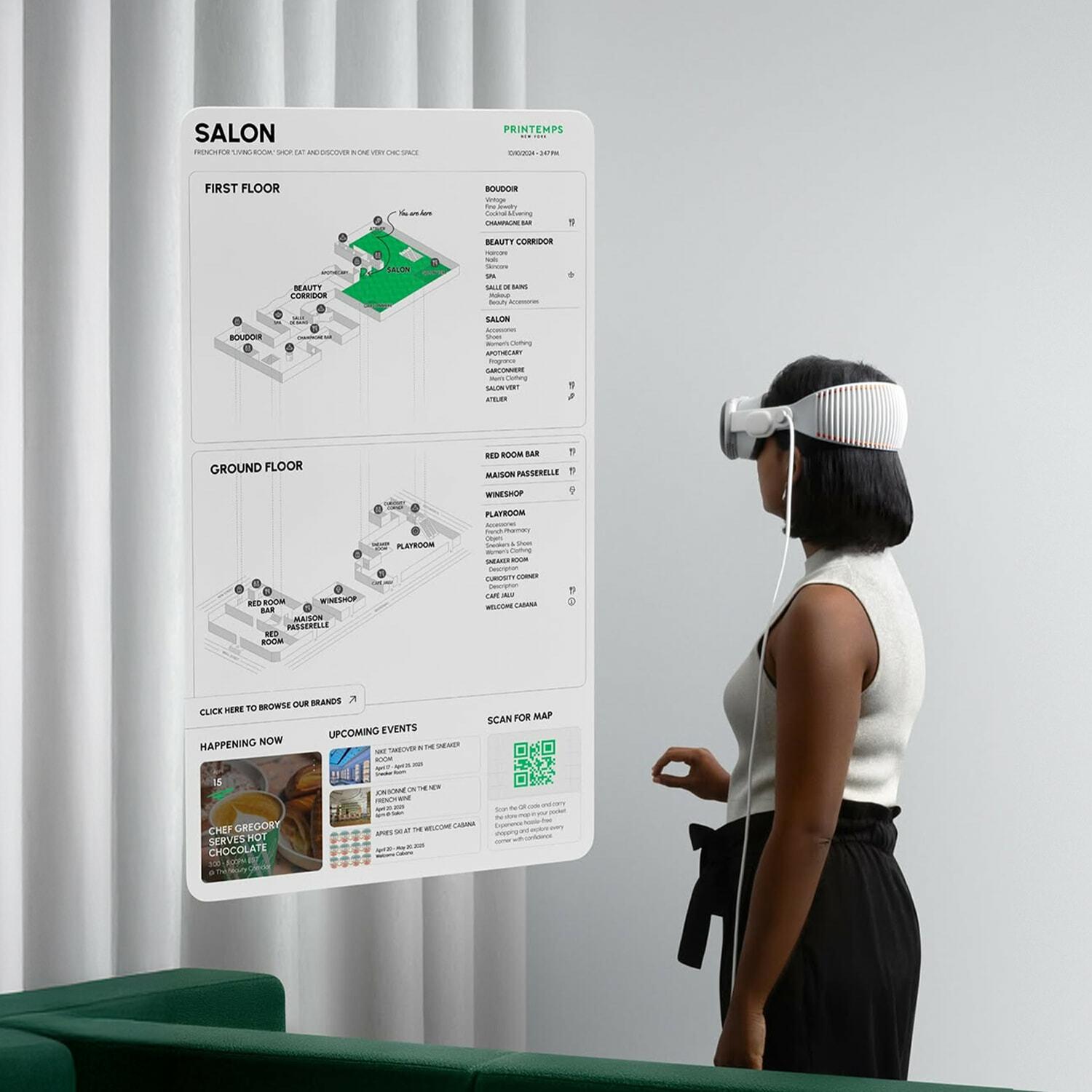
Apple Vision Pro carried fidelity. Industrial design used it for high-detail review where material, finish, and surface transition had to be judged rather than inferred, then used the same environment to present the object to the SATYA team at full scale. The division was deliberate: Quest and ShapesXR for collaborative buildability, Vision Pro for fidelity and client decision-making.
Constructability questions were settled in the model rather than deferred to a physical prototype. Design, engineering, and the production partner worked from the same spatial reference, and client approvals carried more real information into the next build phase. The process reduced the risk of surprises between approval and assembly for a product too large and too spatial to judge on a monitor.