The problem is architectural
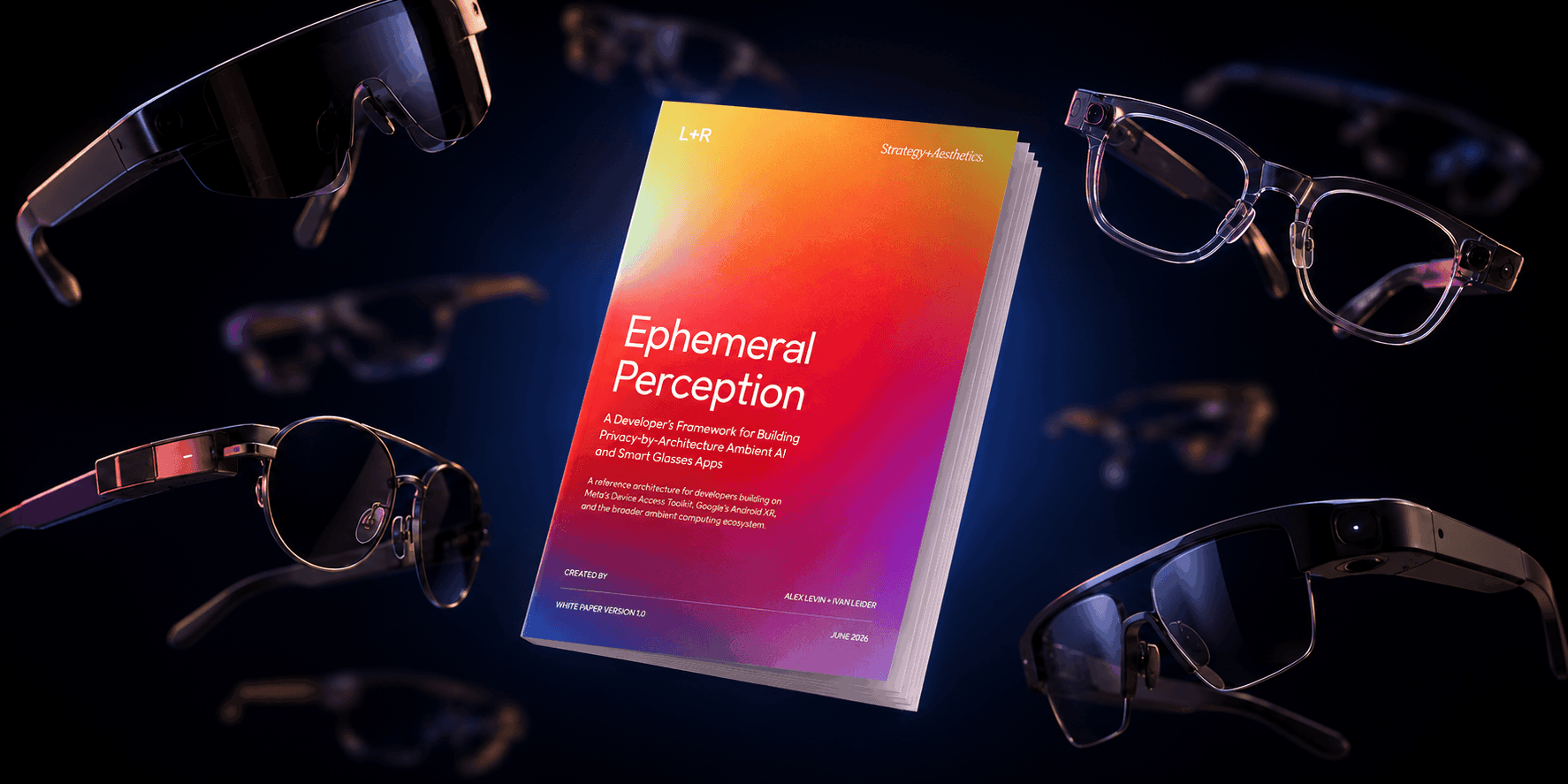
In a new L+R white paper, Alex Levin and Ivan Leider outline Ephemeral Perception, a framework for building useful AI systems without normalizing the continuous capture and storage of the world around us.
For most of the connected-device era, the dominant pattern has been simple: capture raw data, send it to the cloud, process it, store it, and return a result. That model was practical when local compute was limited and the primary interface was a phone, laptop, or browser session. It becomes far more consequential when the camera is worn on a person's face.
In ambient computing, raw visual data is not just another input stream. It may contain private spaces, bystanders, conversations, documents, screens, payment information, and moments no one intentionally chose to record. Once that footage leaves the device, it can be stored, reviewed, breached, subpoenaed, or repurposed. The privacy issue is not only what a company promises to do with the data. The deeper issue is that the data exists at all.
Meaning, not footage
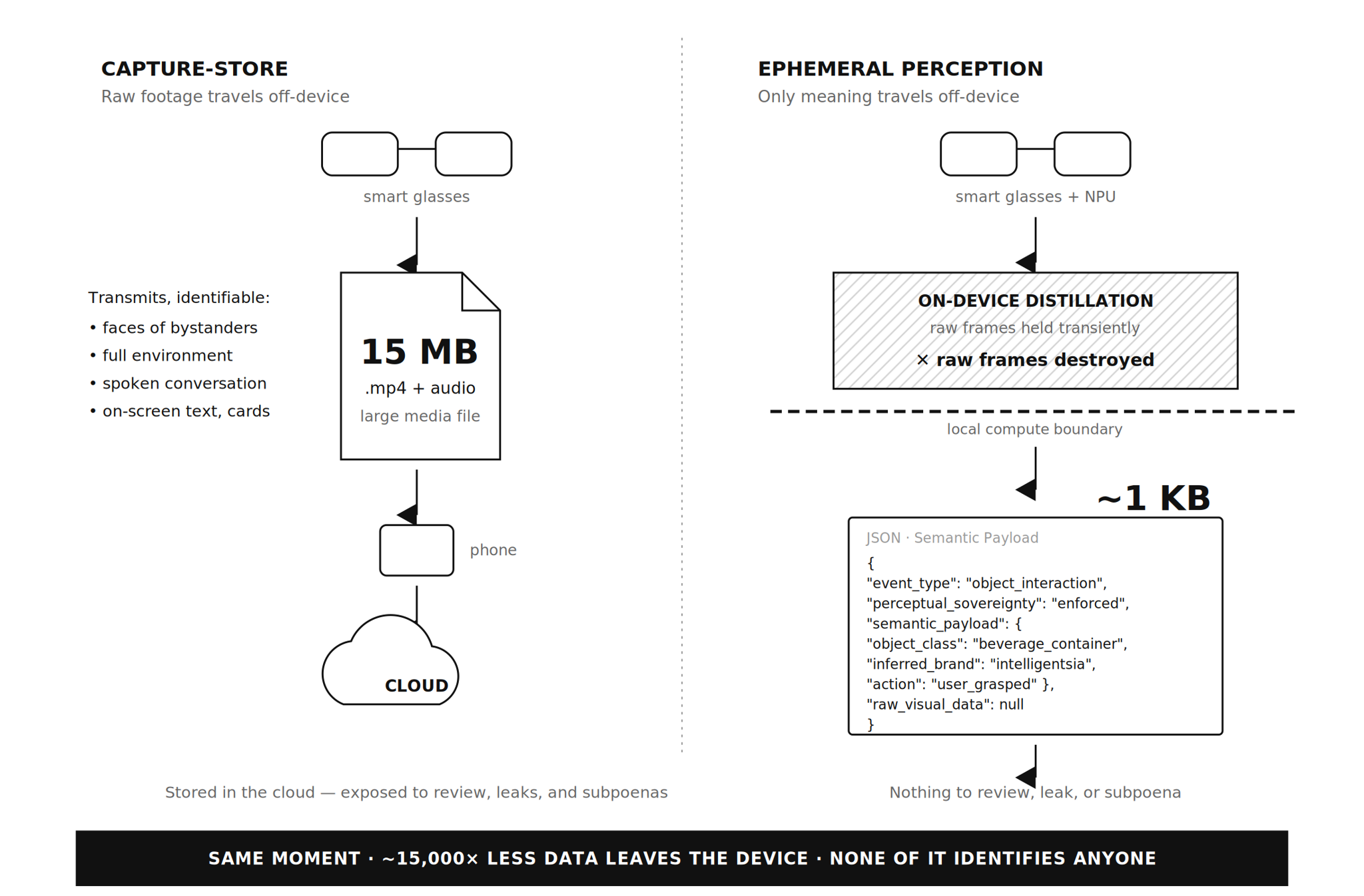
Ephemeral Perception begins with a different premise: the goal of visual AI is not to preserve images, but to extract useful meaning from them. A wearable system does not need to keep a video stream of a desk to know that a notebook, laptop, and coffee cup are present. It does not need to retain a raw frame to understand that a user is looking at a product label, a transit sign, or a maintenance panel.
The framework proposes that raw visual input should be converted into structured semantic information at the point of capture, then discarded immediately and irreversibly. The device perceives the world, extracts the relevant meaning, and destroys the visual signal before it becomes part of a wider chain of custody. What remains is lighter, more useful, and more appropriate for application logic.
Consent by architecture
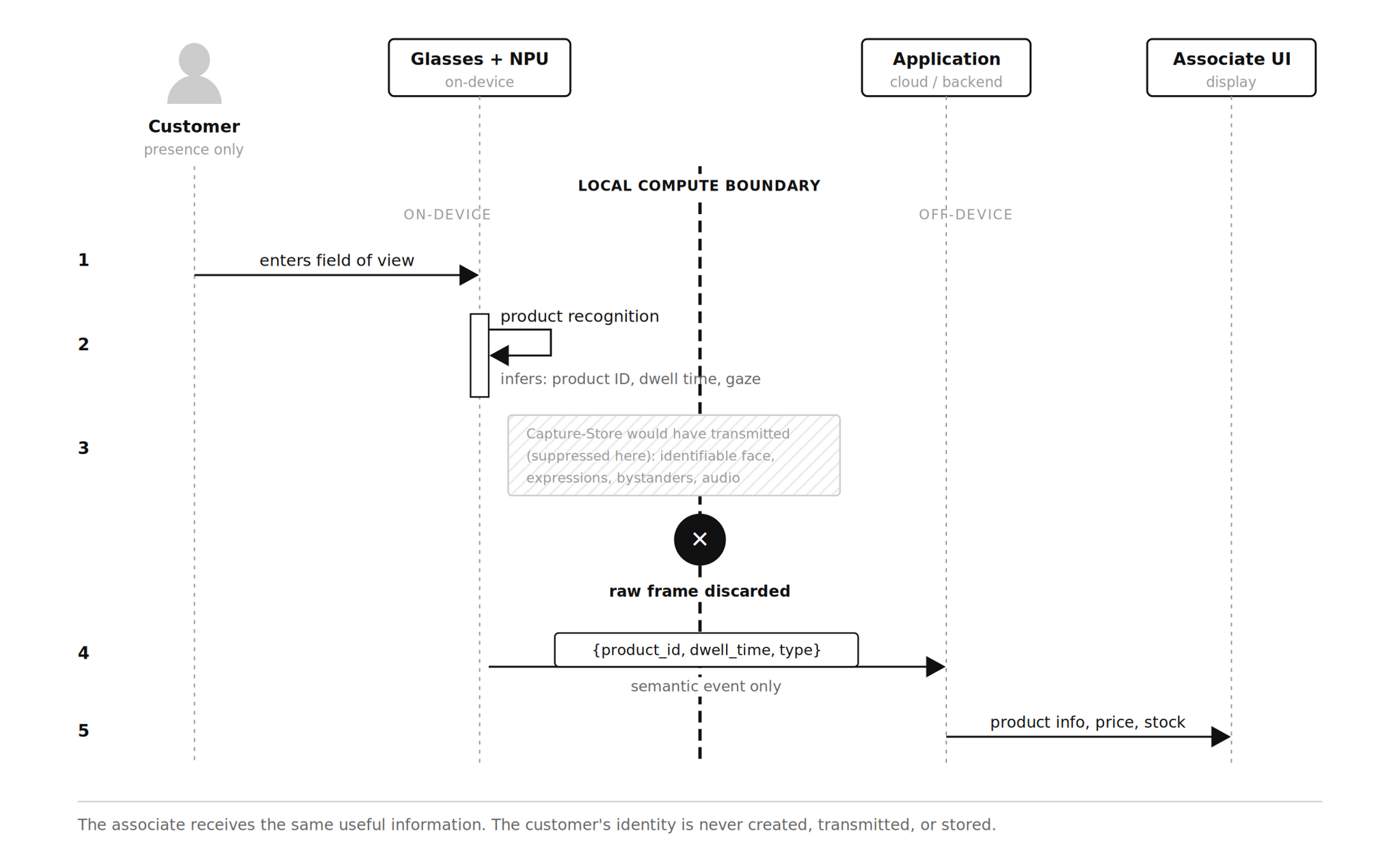
The paper defines this approach as Consent-by-Architecture. Instead of relying on privacy policies, consent screens, or after-the-fact compliance controls to manage highly sensitive raw media, the system reduces risk through its underlying technical design. The architecture itself limits what can be misused.
This distinction matters because ambient devices will be used in environments where traditional consent models break down. A bystander may never see the terms of service. A colleague may not know when a sensor is active. A customer may not understand whether a device is processing locally or sending footage elsewhere. Ephemeral Perception shifts the burden away from perfect human awareness and toward enforceable system constraints.
Performance and privacy do not have to compete
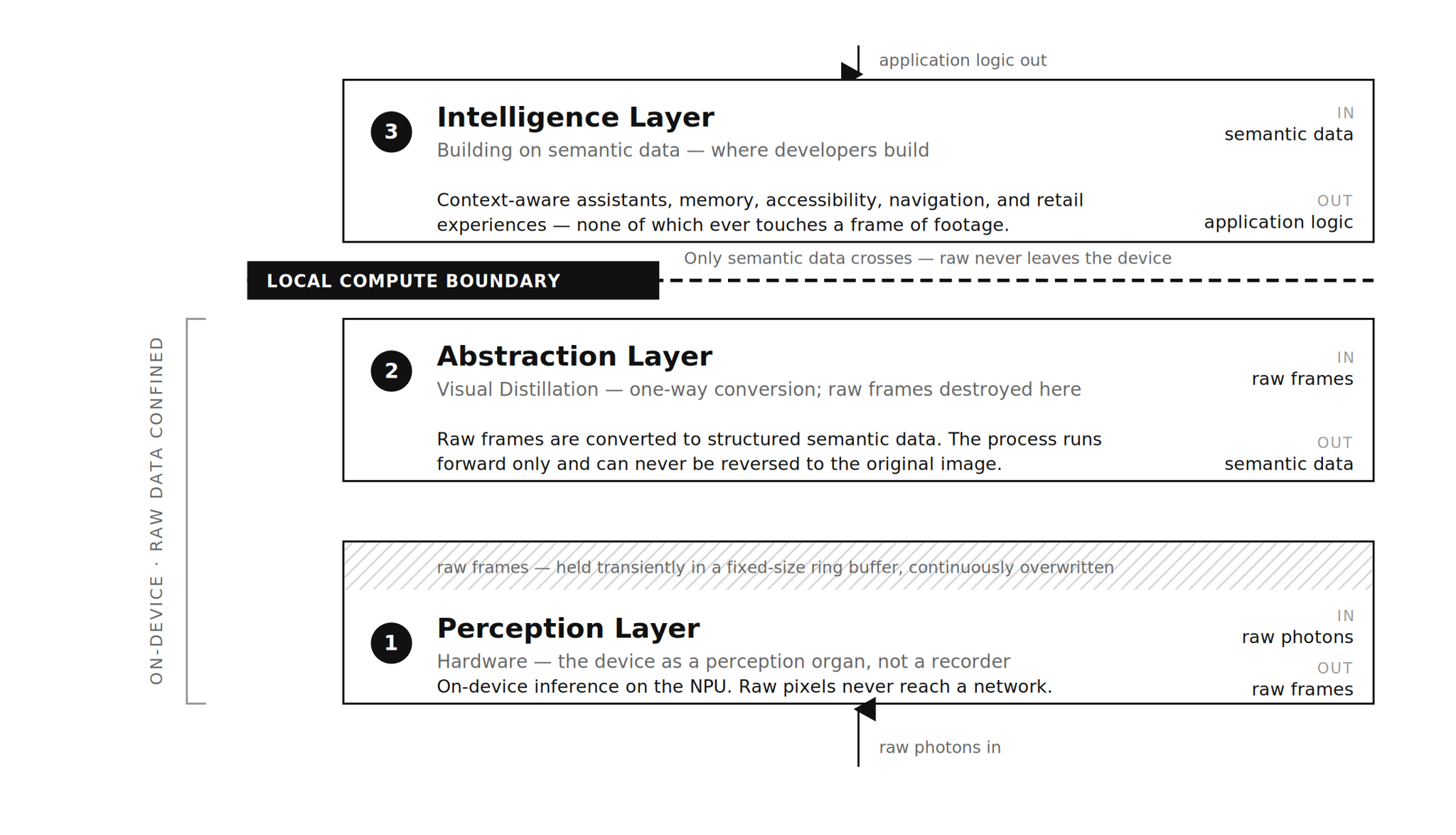
The white paper also argues that this is not a trade-off between capability and safety. On-device perception can reduce latency, lower power draw, and avoid the continuous transmission of heavy raw video streams. By emitting a semantic stream rather than a single cloud-bound video feed, the same underlying perception layer can support multiple applications without requiring each one to request access to raw footage.
For developers, that changes the design surface. Teams can begin by defining the semantic schema their application needs, then design around data minimization from the start. A navigation assistant, retail tool, field-service workflow, or accessibility product may need context, objects, labels, and spatial relationships. It rarely needs permanent visual records.
Why L+R is publishing this now
Ephemeral Perception was shaped by L+R's work across spatial computing, mobile systems, and emerging wearable platforms, including hands-on development with Meta's Device Access Toolkit and smart-glasses interfaces. The paper reflects a practical concern: if the industry carries smartphone-era capture-and-store defaults into ambient AI, those defaults may become standards before better patterns have time to form.
Emerging AI hardware will need more than faster models and smaller devices. It will need architectures that people can trust in shared spaces. Ephemeral Perception offers one way forward: extract the meaning, discard the raw signal, and make privacy a property of the system rather than a promise layered on top of it.